Louise Lawler
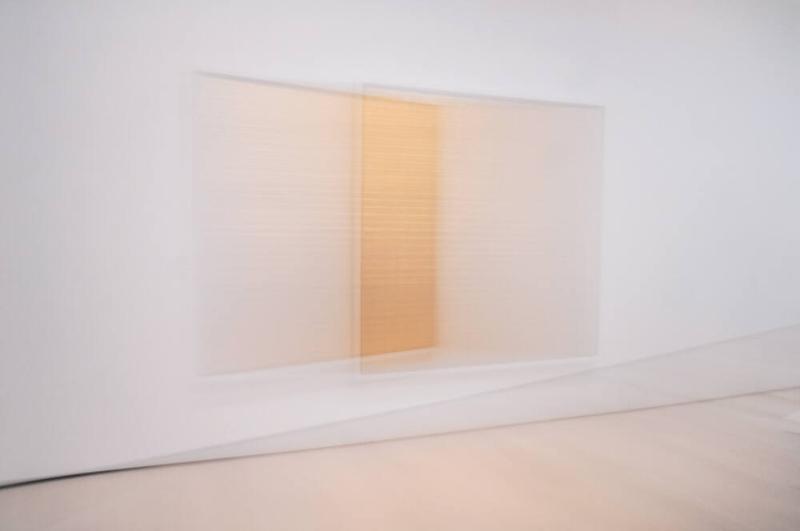
Friendship (swiped)
Artist
Louise Lawler
(1947 - ), American
Original Title
Friendship (swiped)
Date2022
MediumDye sublimation print on museum box
Dimensions122 × 183 cm
Classificationsprints
Credit LineKunsthalle Praha
DescriptionAmerican artist Louis Lawler is one of the key figures of what is known as the Pictures Generation, which gained prominence during the late 1970s. The name itself was coined by art theorist Douglas Crimp, referring to a new reality where human experiences were increasingly influenced by mass media imagery. The term is broadly used to denote to post-modern generation of conceptual artists whose work reacted to the media cultures of film, television, advertising and other imagery linked to the commercialization of public space through visual culture. These artists employed reproduction techniques and appropriation strategies to investigate the functions and codes of media representation. Lawler, one of the most influential women artists of our time, is known for her feminist and anti-war activism as well as her interest in collective authorship. She developed her distinctive style in the early 1980s, during a boom in the art market and the overall economy. The central medium of her practice is digital photography, which she uses as a conceptual tool and a means of presenting alternative perspectives of the subject, drawing attention to often-overlooked elements of the art world. One of Lawler’s key practices involves photographing paintings by renowned artists—such as Andy Warhol, Jackson Pollock, and Gerhard Richter—in the spaces they are currently found in, including collectors’ houses, museum and gallery exhibitions, auction houses, depositories, and art fairs. By doing so, she intentionally shifts the viewer’s focus from the individual artwork to its broader context, demonstrating how our interpretation of art is shaped by its setting. Her work exposes everyday realities of the art world, its circuits, and the varied ways artworks are presented, deliberately highlighting the intersection of art and commerce. Consequently, her appropriations pose questions about economic inequality, the use value versus the financial value of art, and the power dynamics at play between individuals and larger institutional structures. Often associated with institutional critique, her work critically examines the culture industry and the commercialization of art. Another facet of her oeuvre is formed by ephemeral works that reflect the rapid flow of time and offer profound insights into on various aspects of human life. An important part of understanding Lawler’s work is the way she presents her photographs—for instance as monumental installations, museum boxes, events, publications, souvenirs (match boxes, postcards, posters), and gift certificates—which challenge viewers’ conventional tastes and ideas about the presentation of art. Lawler has also often presented her work through various text-based materials, such as labels, press releases, and invitations, which she imbued with unexpected content that broke from convention. Her humorous, subversive artworks force viewers to interpret them through their own social and emotional experiences, thus reframing the existing content. This aim is further supported by Lawler’s reluctance to explain her work or give interviews, which can be understood as conceptually motivated stance. The only important indicators of her artworks’ intended meanings are her intentionally multi-layered titles, which are an integral part of her art. Fundamentally, Lawler’s art documents the rapid transformation of the art world linked to the neoliberal economy while also preserving the aura of the artwork and thus leaving space for interpretative ambiguity.
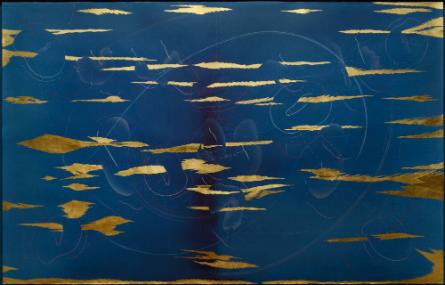
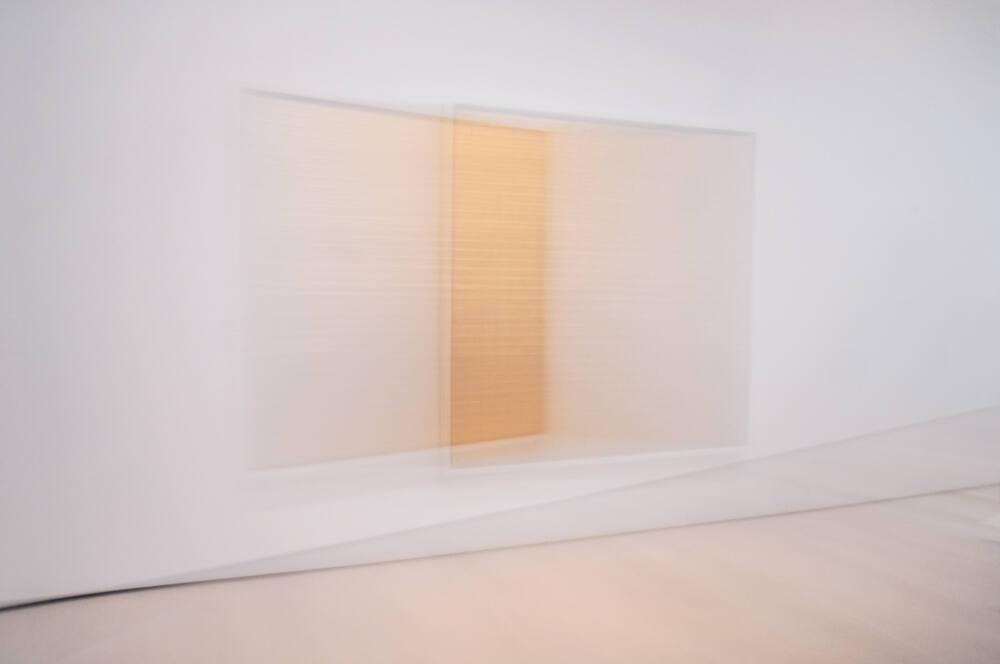
The model for Lawler’s piece Friendship (2022) is the eponymous monochromatic golden work by American artist Agnes Martin from 1963, held in the collection of the Museum of Modern Art in New York. While the regularly distributed strips of gold leaf reflected the minimalist tendencies of the time, Martin’s use of gold also drew on religious traditions, especially Taoism, Zen-Buddhism, and American transcendentalism. Lawler appropriated the piece via photography and proceeded to set it into motion using rasterization and duplication. Her wide-angle photograph contains the original painting twice, with the original gold only shining in its full intensity in a strip where the two images overlap while fading into lighter tones toward the edges. The work’s title invites new possible interpretations and offers space for viewers to reflect on their own understanding of friendship, symbolised by the golden intersection of the overlapping duplicate images. However, the vagueness of the motif also leaves room for individual interpretations, aligning with Lawler’s artistic approach, where every viewer brings in a new perspective rooted in their own perspectives and life experience.
Louise Lawler (born 1949, Bronxville, New York) studied fine arts at Cornell University before moving to Manhattan in 1969, where she began working at the gallery of renowned art dealer Leo Castelli. Between 1981 and 1982, Lawler and Sherrie Levine organised a series of one-night-long exhibitions titled A Picture Is No Substitute for Anything, held at different spaces across New York. In 1982, Lawler had a solo exhibition at Metro Pictures gallery in New York, where she exhibited a set of artworks selected from the gallery’s stockroom, presented as a single artwork titled Arranged by Louis Lawler, which was up for sale for the sum of the individual artworks’ prices with a 10% commission fee added on top of their price. In 1984, she gained access to the residencies of important art collectors Burton and Emily Hall Tremaine, setting the tone for her future thematic focus on the art collection, presentation, and storage. In 1987, she exhibited at the Museum of Modern Art for the first time, as part of the museum’s Projects Series, dedicated to the work of young, up-and-coming artists. In more recent years, Lawler has exhibited at Docuemnta 12 in Kassel (2007) and repeatedly taken part in the Whitney Biennial (1991, 2000, 2008). Major retrospective exhibitions of her work have been held at institutions such as the Museum Ludwig in Cologne (2013) and the Museum of Modern Art in New York (2017). Her work is included in the collections of important museums worldwide, such as the Museum of Modern Art, New York; the Whitney Museum, New York; the Guggenheim Museum, New York; the LACMA: Los Angeles County Museum of Art, Los Angeles; the Art Institute of Chicago; the Museum of Fine Arts, Boston; the Walker Art Center, Minneapolis; Tate Britain, London; the Centre Georges Pompidou, Paris; the Israel Museum, Tel Aviv; Kunsthalle Hamburg; Moderna Museet, Stockholm; Museet for Samtidskunst, Oslo; Museum Boymans-van Beuningen, Rotterdam, and the Yale University Art Gallery, New Haven, Connecticut.
The model for Lawler’s piece Friendship (2022) is the eponymous monochromatic golden work by American artist Agnes Martin from 1963, held in the collection of the Museum of Modern Art in New York. While the regularly distributed strips of gold leaf reflected the minimalist tendencies of the time, Martin’s use of gold also drew on religious traditions, especially Taoism, Zen-Buddhism, and American transcendentalism. Lawler appropriated the piece via photography and proceeded to set it into motion using rasterization and duplication. Her wide-angle photograph contains the original painting twice, with the original gold only shining in its full intensity in a strip where the two images overlap while fading into lighter tones toward the edges. The work’s title invites new possible interpretations and offers space for viewers to reflect on their own understanding of friendship, symbolised by the golden intersection of the overlapping duplicate images. However, the vagueness of the motif also leaves room for individual interpretations, aligning with Lawler’s artistic approach, where every viewer brings in a new perspective rooted in their own perspectives and life experience.
Louise Lawler (born 1949, Bronxville, New York) studied fine arts at Cornell University before moving to Manhattan in 1969, where she began working at the gallery of renowned art dealer Leo Castelli. Between 1981 and 1982, Lawler and Sherrie Levine organised a series of one-night-long exhibitions titled A Picture Is No Substitute for Anything, held at different spaces across New York. In 1982, Lawler had a solo exhibition at Metro Pictures gallery in New York, where she exhibited a set of artworks selected from the gallery’s stockroom, presented as a single artwork titled Arranged by Louis Lawler, which was up for sale for the sum of the individual artworks’ prices with a 10% commission fee added on top of their price. In 1984, she gained access to the residencies of important art collectors Burton and Emily Hall Tremaine, setting the tone for her future thematic focus on the art collection, presentation, and storage. In 1987, she exhibited at the Museum of Modern Art for the first time, as part of the museum’s Projects Series, dedicated to the work of young, up-and-coming artists. In more recent years, Lawler has exhibited at Docuemnta 12 in Kassel (2007) and repeatedly taken part in the Whitney Biennial (1991, 2000, 2008). Major retrospective exhibitions of her work have been held at institutions such as the Museum Ludwig in Cologne (2013) and the Museum of Modern Art in New York (2017). Her work is included in the collections of important museums worldwide, such as the Museum of Modern Art, New York; the Whitney Museum, New York; the Guggenheim Museum, New York; the LACMA: Los Angeles County Museum of Art, Los Angeles; the Art Institute of Chicago; the Museum of Fine Arts, Boston; the Walker Art Center, Minneapolis; Tate Britain, London; the Centre Georges Pompidou, Paris; the Israel Museum, Tel Aviv; Kunsthalle Hamburg; Moderna Museet, Stockholm; Museet for Samtidskunst, Oslo; Museum Boymans-van Beuningen, Rotterdam, and the Yale University Art Gallery, New Haven, Connecticut.