Běla Kolářová
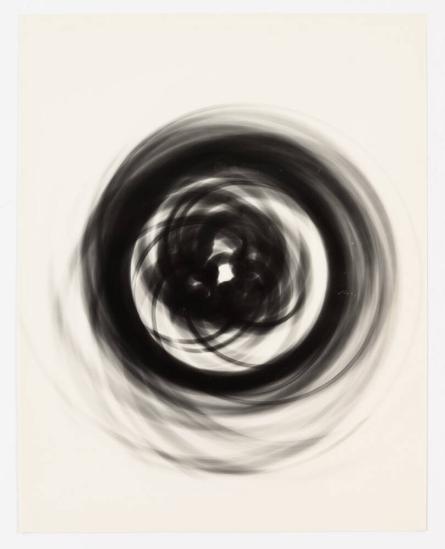
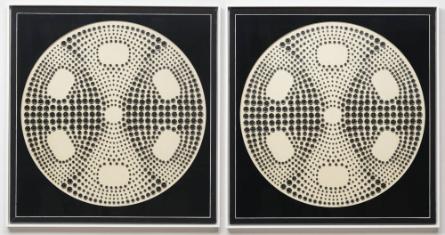
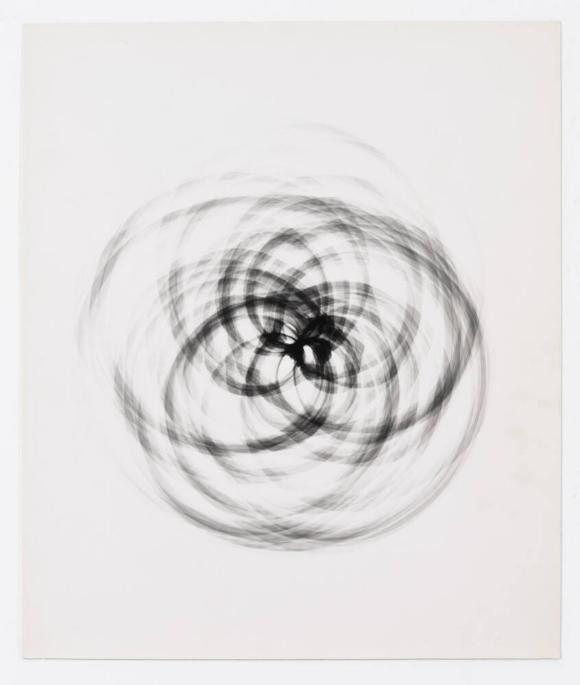
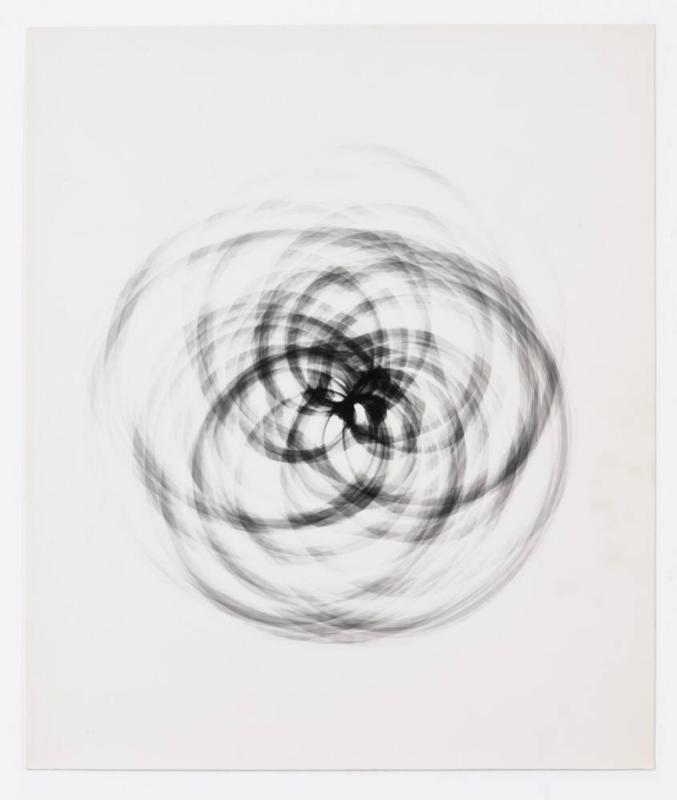
Radiogram of a Circle
Artist
Běla Kolářová
(1923, Terezín - 2010, Praha), Czech
Original Title
Roentgenogram kruhu
Date1963
Mediumphotogram – light drawing on photographic paper
Dimensions28,3 × 23,8 cm
Classificationsphotograph
Credit LineKunsthalle Praha
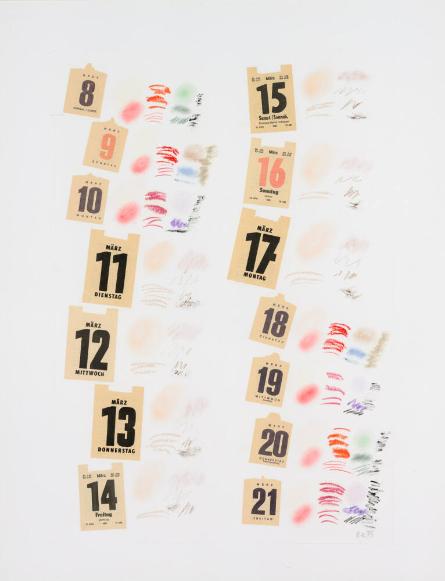
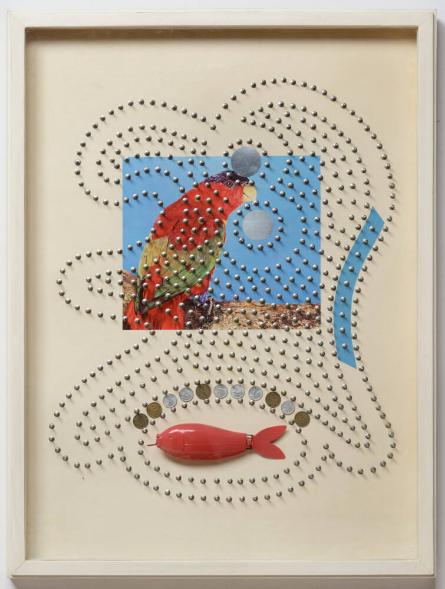
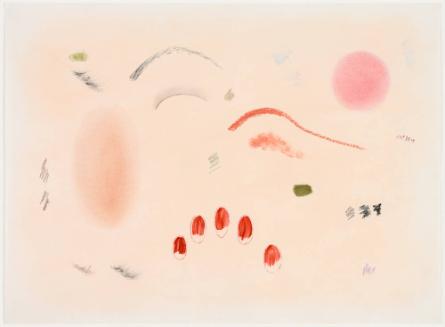
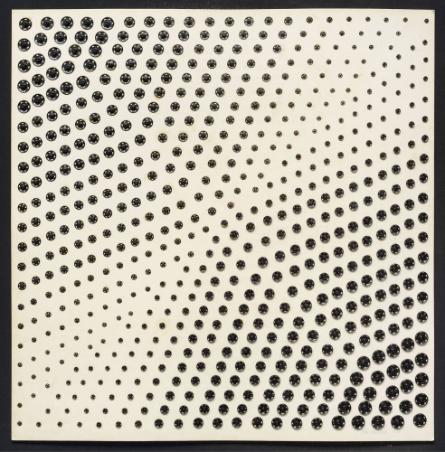
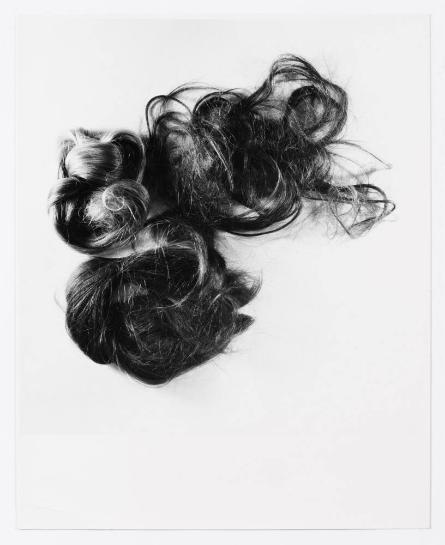
DescriptionBěla Kolářová was a prominent Czech artist and photographer. Her work is inseparably linked to the so-called second avantgarde of the 1960s. Alongside her Constructivist-oriented peers, Kolářová used her work to explore questions of the creative process and the initial concept which defines the final composition. In contrast to stringent constructivism, her work is strongly influenced by Neo-Dadaism and the Czech movement known as new sensitivity, both of which pursued a playful approach to order and geometric structure. Kolářová’s distinctive style is defined by intimacy and authenticity; the techniques and materials she uses are closely linked to manual and domestic work and the stereotypically conceived women’s world in general, conveying an intuitive affinity with feminism. Her entry into art was through photography, which she engaged with from the mid-1950s onward. Her photographs mostly captured banal objects and their fragments, which she arranged into geometric grids. Subsequently, she began to focus on experimenting with negatives in a darkroom, working with photograms, roentgenograms, light painting, and artificial negatives. She then developed an interest in collages and assemblages composed of everyday objects such as makeup, hairpins, snap fasteners, and leftover kitchen waste. Due to their relation to questions of rational structures, these works represent an original contribution to contemporary constructivist and minimalist tendencies. During the 1970s, Kolářová created large-format drawings using makeup and body prints, reflecting the trends of body art and new artistic understandings of corporeality and eroticism. In her subsequent work, Kolářová moved away from exclusively focusing on women’s existence and identity, producing a series of assemblages in collaboration with her husband, Jan Kolář. Instead of visual imagery, her work began to primarily incorporate texts and their fragments. In the following years, she returned to pictorial motifs, creating humorous, brightly colored assemblages.
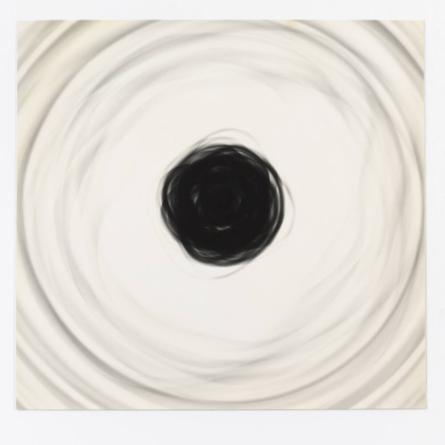
Roentgenograms of a Circle (1963) builds on Kolářová’s previous photographic experiments. She created this series of photograms between 1962 and 1963. They are based on her observations of movement and light, and their abstract nature evokes neo-constructivist and kinetic art, popular in the Czech Republic during the 1960s. Kolářová’s roentgenograms are among the most radical artistic expressions of the art group Křižovatka (Crossroads) and the contemporary Czech art scene more broadly. They represent one of the experimental techniques she invented while experimenting in the dark room. Art historian Marie Klimešová described these works as “tiny performances” during which Kolářová actively manipulated the template and the light used to create the pieces. Their purpose was to capture—on the surface of a photographic paper—the trace of a rotating line, the dynamics and varied forms of which were determined by her bodily action. The roentgenogram series comprises numerous iterations of this process, incorporating varied rotating discs and myriad subtle shades of grey.
Běla Kolářová (1923, Terezín–2010, Prague) is a self-educated artist. Having married renowned artist Jiří Kolář in 1949, she became part of the Czech experimental, neoconstructivist artist circles. Kolářová and her husband were founding members of the art group Křižovatka (Crossroads), active from 1963 to 1968. During the 1960s, she took part in several important group exhibitions (Křižovatka, 1964; Surrealism and Photography, 1966-1967; New Sensitivity, 1968). In 1968, she had her first solo exhibition in the Gallery on the Charles Square. However, she remained the shadow of her husband and was burdened with securing their financial well-being, only dedicating herself to art in her free time. After the suppression of the Prague Spring in 1968, Kolářová was banned from exhibiting. In 1979, she and her husband left for East Berlin, where Kolář received a year-long scholarship. While Kolář subsequently emigrated to Paris, Kolářová returned to Prague to save his collection and artworks, which she gradually sent to France. She only received a travel permit in 1985; she and her husband would eventually return to the Czech Republic in 1999. After 1989, numerous retrospective exhibitions of her work were held in the Czech Republic and abroad. She received significant international acclaim in 2007 at Documenta 12 Kassel in 2007. Her international recognition was subsequently bolstered by two exhibitions at the Museum of Modern Art in New York City, titled Transmissions: Art in Eastern Europe and Latin America, 1960-1980 (2014) and Making Space: Woman Artists and Postwar Abstraction (2017). Her work is currently held in the collections of numerous Czech and international institutions including the Tate Modern in London and the Museum of Modern Art in New York City.
Roentgenograms of a Circle (1963) builds on Kolářová’s previous photographic experiments. She created this series of photograms between 1962 and 1963. They are based on her observations of movement and light, and their abstract nature evokes neo-constructivist and kinetic art, popular in the Czech Republic during the 1960s. Kolářová’s roentgenograms are among the most radical artistic expressions of the art group Křižovatka (Crossroads) and the contemporary Czech art scene more broadly. They represent one of the experimental techniques she invented while experimenting in the dark room. Art historian Marie Klimešová described these works as “tiny performances” during which Kolářová actively manipulated the template and the light used to create the pieces. Their purpose was to capture—on the surface of a photographic paper—the trace of a rotating line, the dynamics and varied forms of which were determined by her bodily action. The roentgenogram series comprises numerous iterations of this process, incorporating varied rotating discs and myriad subtle shades of grey.
Běla Kolářová (1923, Terezín–2010, Prague) is a self-educated artist. Having married renowned artist Jiří Kolář in 1949, she became part of the Czech experimental, neoconstructivist artist circles. Kolářová and her husband were founding members of the art group Křižovatka (Crossroads), active from 1963 to 1968. During the 1960s, she took part in several important group exhibitions (Křižovatka, 1964; Surrealism and Photography, 1966-1967; New Sensitivity, 1968). In 1968, she had her first solo exhibition in the Gallery on the Charles Square. However, she remained the shadow of her husband and was burdened with securing their financial well-being, only dedicating herself to art in her free time. After the suppression of the Prague Spring in 1968, Kolářová was banned from exhibiting. In 1979, she and her husband left for East Berlin, where Kolář received a year-long scholarship. While Kolář subsequently emigrated to Paris, Kolářová returned to Prague to save his collection and artworks, which she gradually sent to France. She only received a travel permit in 1985; she and her husband would eventually return to the Czech Republic in 1999. After 1989, numerous retrospective exhibitions of her work were held in the Czech Republic and abroad. She received significant international acclaim in 2007 at Documenta 12 Kassel in 2007. Her international recognition was subsequently bolstered by two exhibitions at the Museum of Modern Art in New York City, titled Transmissions: Art in Eastern Europe and Latin America, 1960-1980 (2014) and Making Space: Woman Artists and Postwar Abstraction (2017). Her work is currently held in the collections of numerous Czech and international institutions including the Tate Modern in London and the Museum of Modern Art in New York City.