Endre Nemes
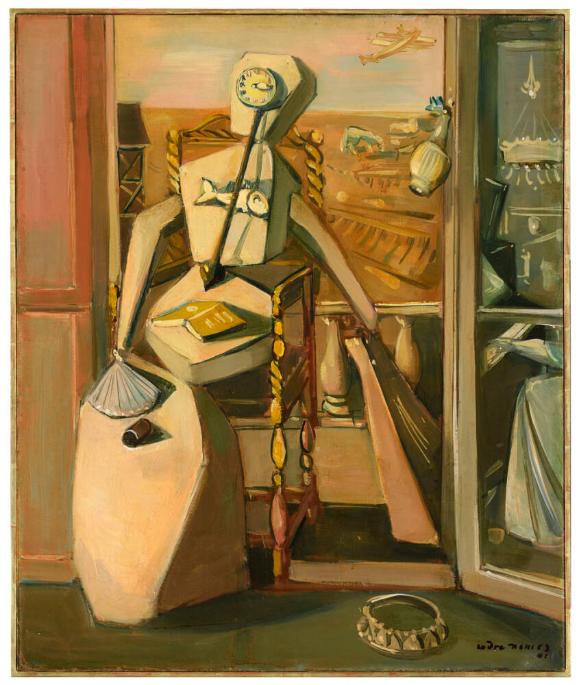
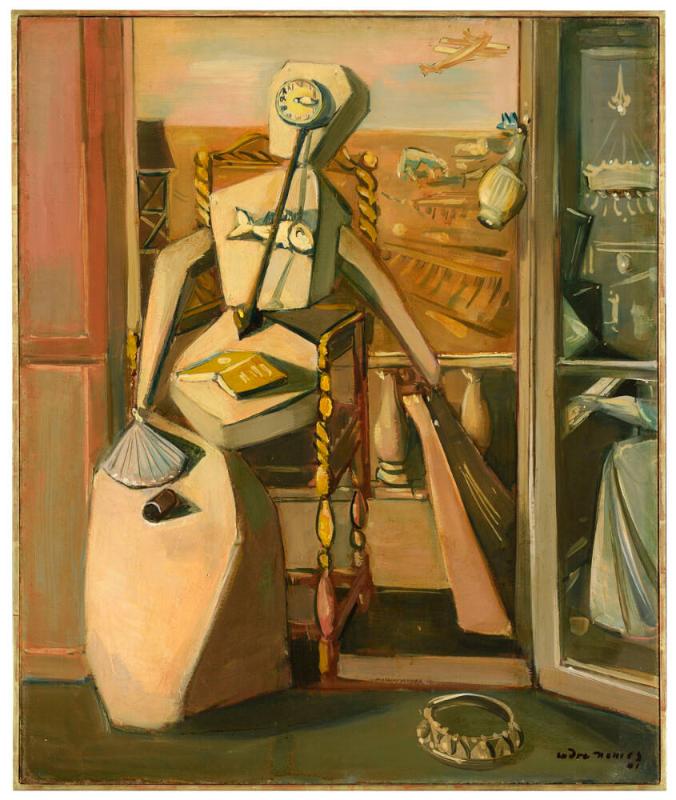
Melancholy
Artist
Endre Nemes
(1909, Pécsvárad - 1985, Stockholm), Maďarsko
Original Title
Melancholie
Date1941
Mediumoil on canvas
Dimensions80 × 67 cm
Classificationspaintings
Credit LineKunsthalle Praha
DescriptionEndre Nemes’s work cannot be easily defined through one particular style, although he is generally considered part of the broader current of surrealism. In the Czech context, his distinctive metaphysical paintings also often lead to his classification as a proponent of what is termed Czech imaginative art, which he used to express his opposition to the destruction of human values in the lead-up to World War II, linked to the rise of fascism. Nemes approached painting with a meticulousness resembling the Old Masters: he studied recipes for tempera paint and prepared almost all his materials himself. The 1930s, during which he completed his studies and later left the country, were a fertile creative period for him. His metaphysical interiors from these times are dominated by strange phantom figures. Their stylisation incorporated elements of caricature and the grotesque, reflecting the gloom, drama, and uncertainty gradually creeping into ordinary civic life. In 1935, Nemes created a series of paintings that marked a shift in focus toward a very personal sphere of life. Especially between 1936 and 1937, he painted several important works conveying horrific visions of the future, veiled in a language of complex signs and symbols. In reaction to the dramatic events of the time, certain figures are depicted with flayed skin while others resemble lifeless automatons. The mathematical devices, machines, astrological charts, and other artifacts included in these fantastical compositions represent metaphors for transience, the loss of security, and the decay of values. His emigration from Czechoslovakia in 1938 led to a shift away from metaphysical painting toward non-figurative painting styles—nevertheless, the organic forms of these works still demonstrate Nemes’s inclination toward a fantastical and symbolic approach to painting, as well as toward a sensuous portrayal of the surrounding world. The period of the second half of the 1950s (known as his Valand period, 1947-1955), can be considered the pinnacle of his non-figurative work. Around 1960, he arrived at a creative synthesis that incorporated the influences of tachisme and utilised controlled chance and static black contour lines. From the mid-1960s onwards, an emphasis on content and meaning returned to his work, further supported by the incorporation of collage, which, in combination with the surrounding artwork, formed an unarticulated pictorial space that was meant to convey the loss of spirituality in the contemporary world. Titles became an important key for the interpretation of these works. During this final creative period, Nemes’s canvases ironically reflected the world of technology and machine civilization, juxtaposing it with the world of nature, which, with its biological transformations, provided inspiration for his dynamic compositions.
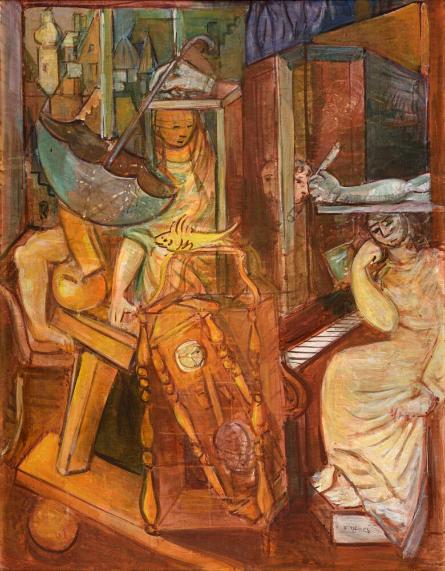
Melancholia (1941) represents a symbolic end of Nemes’s metaphysical style, which he explored during his prolific creative period in Prague. The interior is dominated by a human automaton with a clock instead of a face, while the background is formed by a barren landscape over which an airplane flies—a metaphor for the fear and danger brought about by war. Behind a glass door, part of a human figure playing a piano can be seen, evoking a transient, melancholic atmosphere.
Endre Nemes (1909, Pécsvárad - 1985, Stockholm), born Andrej Nágel, was a painter, teacher, graphic artist, poet, and cartoonist. From 1924, he lived in the Czechoslovakian town of Spišská Nová Ves before moving to Prague in 1928, where he initially worked as a caricature painter while also publishing a collection of poems and working as a jounralist. From 1930 to 1935, he studied at the Academy of Fine Arts in Prague, in the studio of Willi Nowak. Alongside his studies, Nemes found another source of inspiration in the Prague Picture Gallery, where paintings by the French Impressionists were on display. In 1933, he travelled to Paris on a scholarship, accompanied by Jakub Bauernfreund; together, they would have their first exhibition at the Dr. Feigl Gallery in Prague. Nemes was also active in several groups on the Prague art scene: he took part in exhibitions of the Prague Secession (1930-1932) and, after his studies, also briefly became a member of the Umělecká beseda artists’ forum (1936-1938). Before moving to Scandinavia, Nemes had a solo exhibition (with Jakub Bauernfreund) at the House of Art in Ostrava and in Košice, which showcased most of his works from his metaphysical period. In the autumn of 1938, he emigrated to Finland. In the following year, he began teaching at the Free Art School in Helsinki and participated in two group exhibitions of Finnish art at the Konsthallen in Helsinki. From 1940 onwards, Nemes became part of the Swedish art scene and an important Scandinavian cultural figure with international recognition. He was a founding member of the Swedish surrealist group Minotaur. Apart from his artistic practice, he was also the director of the Valand School of Fine Art in Gothenburg (now the Valand Academy), where he taught. In 1948, he had a solo exhibition at the Konsthallen in Gothenburg. In addition to high art, Nemes was also involved in various related fields, for instance set and costume design for the Royal Opera House in Stockholm (1949). He was commissioned to create monumental artworks for the University of Gothenburg, schools, hospitals, and savings banks in Stockholm and other cities, and art commissions for the Swedish Parliament. In 1959, Nemes was invited to the first post-war Documenta festival (Documenta II) in Kassel, which presented a retrospective look back at the development of modern art and a politically determined shift towards abstraction as the defining style of the new era. In 1965, he received a creative scholarship from the government as well as the annual state prize for artistic creation, and he was also appointed as a member of the Royal Swedish Academy of Fine Arts; later, he would also be awarded the Prince Eugene Gold Medal for outstanding artistic achievement (1980) and the Henrik Steffen Prize from the University of Kiel (1981). Nemes’s artistic contributions were also recognised by a major touring exhibition that travelled around Scandinavia, premiering at the Royal Academy in Stockholm (1979). The 1980s also brought a new interest in his work in his native Hungary, where the Endre Nemes Museum opened in 1984. Since the 1960s, several comprehensive exhibitions summarising his artistic contribution have also been held in Prague. Consequently, he bequeathed fifteen of his works to the National Gallery in Prague. Nemes exhibited in most European countries as well as in the USA. His work is included in the collections of many prominent institutions, including the Museum of Modern Art in Stockholm, the Philadelphia Art Museum, and the Brooklyn Museum.
Melancholia (1941) represents a symbolic end of Nemes’s metaphysical style, which he explored during his prolific creative period in Prague. The interior is dominated by a human automaton with a clock instead of a face, while the background is formed by a barren landscape over which an airplane flies—a metaphor for the fear and danger brought about by war. Behind a glass door, part of a human figure playing a piano can be seen, evoking a transient, melancholic atmosphere.
Endre Nemes (1909, Pécsvárad - 1985, Stockholm), born Andrej Nágel, was a painter, teacher, graphic artist, poet, and cartoonist. From 1924, he lived in the Czechoslovakian town of Spišská Nová Ves before moving to Prague in 1928, where he initially worked as a caricature painter while also publishing a collection of poems and working as a jounralist. From 1930 to 1935, he studied at the Academy of Fine Arts in Prague, in the studio of Willi Nowak. Alongside his studies, Nemes found another source of inspiration in the Prague Picture Gallery, where paintings by the French Impressionists were on display. In 1933, he travelled to Paris on a scholarship, accompanied by Jakub Bauernfreund; together, they would have their first exhibition at the Dr. Feigl Gallery in Prague. Nemes was also active in several groups on the Prague art scene: he took part in exhibitions of the Prague Secession (1930-1932) and, after his studies, also briefly became a member of the Umělecká beseda artists’ forum (1936-1938). Before moving to Scandinavia, Nemes had a solo exhibition (with Jakub Bauernfreund) at the House of Art in Ostrava and in Košice, which showcased most of his works from his metaphysical period. In the autumn of 1938, he emigrated to Finland. In the following year, he began teaching at the Free Art School in Helsinki and participated in two group exhibitions of Finnish art at the Konsthallen in Helsinki. From 1940 onwards, Nemes became part of the Swedish art scene and an important Scandinavian cultural figure with international recognition. He was a founding member of the Swedish surrealist group Minotaur. Apart from his artistic practice, he was also the director of the Valand School of Fine Art in Gothenburg (now the Valand Academy), where he taught. In 1948, he had a solo exhibition at the Konsthallen in Gothenburg. In addition to high art, Nemes was also involved in various related fields, for instance set and costume design for the Royal Opera House in Stockholm (1949). He was commissioned to create monumental artworks for the University of Gothenburg, schools, hospitals, and savings banks in Stockholm and other cities, and art commissions for the Swedish Parliament. In 1959, Nemes was invited to the first post-war Documenta festival (Documenta II) in Kassel, which presented a retrospective look back at the development of modern art and a politically determined shift towards abstraction as the defining style of the new era. In 1965, he received a creative scholarship from the government as well as the annual state prize for artistic creation, and he was also appointed as a member of the Royal Swedish Academy of Fine Arts; later, he would also be awarded the Prince Eugene Gold Medal for outstanding artistic achievement (1980) and the Henrik Steffen Prize from the University of Kiel (1981). Nemes’s artistic contributions were also recognised by a major touring exhibition that travelled around Scandinavia, premiering at the Royal Academy in Stockholm (1979). The 1980s also brought a new interest in his work in his native Hungary, where the Endre Nemes Museum opened in 1984. Since the 1960s, several comprehensive exhibitions summarising his artistic contribution have also been held in Prague. Consequently, he bequeathed fifteen of his works to the National Gallery in Prague. Nemes exhibited in most European countries as well as in the USA. His work is included in the collections of many prominent institutions, including the Museum of Modern Art in Stockholm, the Philadelphia Art Museum, and the Brooklyn Museum.