Tomislav Gotovac
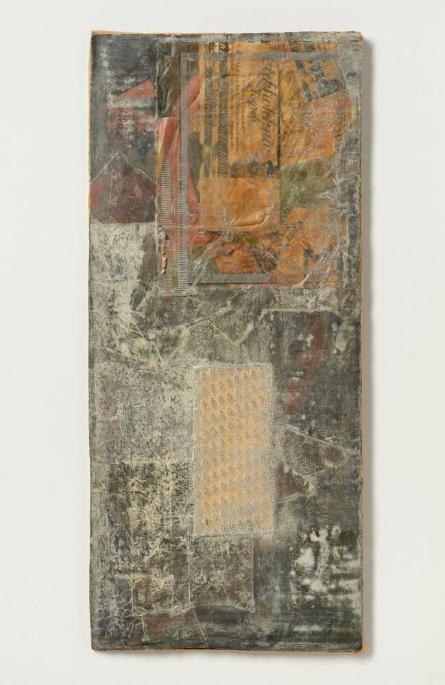
Noises 6
Artist
Tomislav Gotovac
(1937, Sombor - 2010, Zagreb), Croatian
Original Title
Šumovi 6
Date1964
Mediumprinted boxes, paint, paper on cardboard
Dimensions45,7 × 20 cm
Classificationsmixed media works
Credit LineKunsthalle Praha
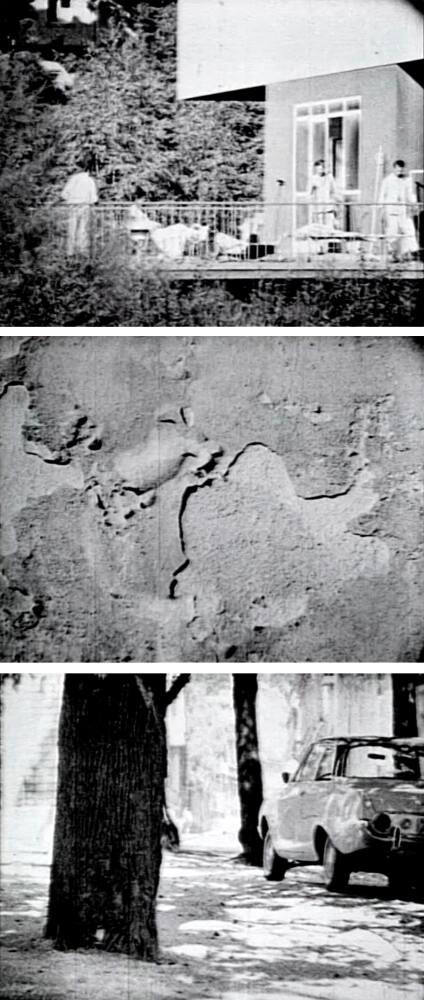
DescriptionTomislav Gotovac was a prominent figure of the Yugoslavian neo-avantgarde, whose distinctive anarchist approach to art is inseparably linked to his life in the Yugoslavian city of Zagreb. His artistic practice combined visual art with the avantgarde and the experimental, with performance, body art, conceptual art, documentary film, and live action film. Gotovac was strongly influenced by Western culture, which began flowing into Yugoslavia after the county’s separation from the Soviet Union in 1948. He became obsessed with movies, particularly Hollywood productions, which heavily influenced his early photographic performances. During the 1960s, he used found newspapers and other fragments to create dadaist collages. In parallel, he also explored the topic of gender roles, addressing questions of relations between men and women, the dynamics of desire, the tension between the real and the imaginary, and the contrast of consumer society and the everyday reality of socialism. In 1967, Gotovac executed the first happening in Zagreb’s public space. His performances are often based on ordinary, mundane activities and convey socially engaged messages. An essential part of these performances is Gotovac’s nude body—for instance, in 1971, he moved around Belgrade fully naked; ten years later, he repeated a similar feat in Zagreb. He also used his work to explore the mutual relation between individuals and social and political systems. His later work reacted to the conditions of post-socialism and neoliberalism as well as to the concept of a globally operated system based on grand narratives disseminated through channels such as film, art, politics, and history.
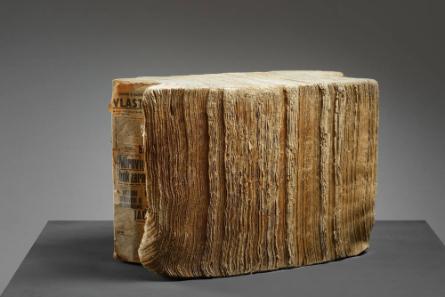
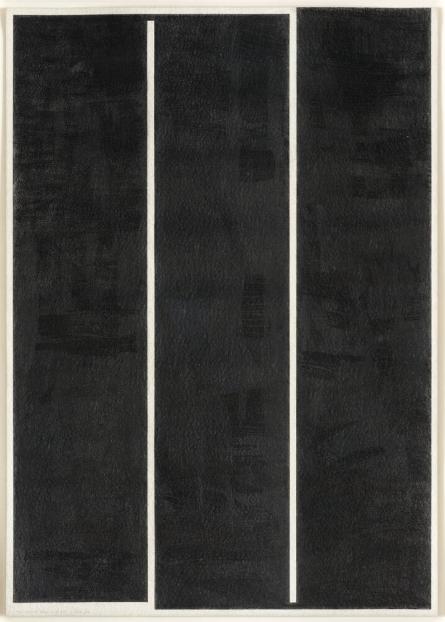
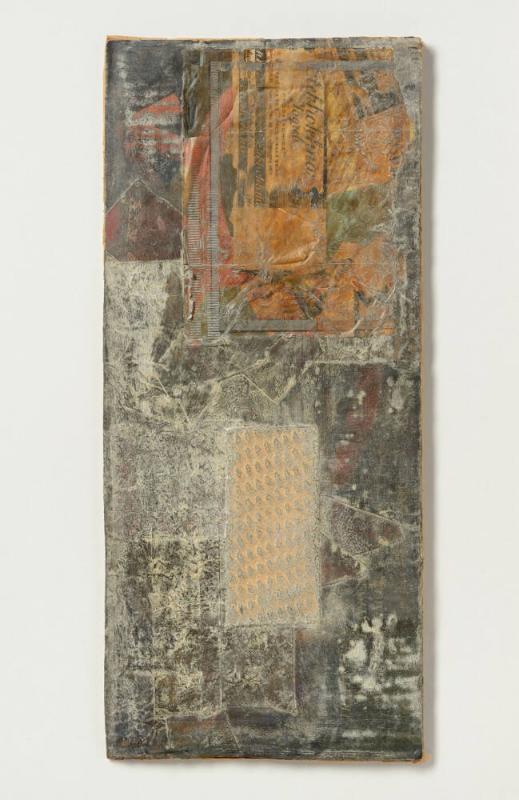
Noises 6 (1964) is part of a series of approximately seventy collages created between 1964 and 1965, which comprise objects such as movie tickets, crumpled notes, matchboxes, public transportation maps, cigarette butts, and Gotovac’s personal items. They can be understood as an explicit quotation of Kurt Schwitters’s work—in 1959, Gotovac was inspired by two of Schwitters’s collages at an exhibition of surrealist and abstract art from the Belgian private collection Urvater which took place in Zagreb. Art Historian Ješa Denegri interprets Gotovac’s collages as intimate diaries which reflect the visual noise of the artist’s everyday life. This piece was included a solo exhibition of his collages at the Izložbeni Salon in Zagreb held in 1988.
Tomislav Gotovac (1937, Sombor – 2010, Zagreb) was born in Yugoslavia, present-day Serbia. From 2004 onward, he used the name Antonio Lauer. In 1941, his family moved to Zagreb, where he would spend the rest of his life apart from an eight-year hiatus between 1967 and 1975. After graduating from high school, Gotovac spent a year studying architecture at the University of Zagreb before spending several years working as a government clerk; in parallel, he began making art in the early 1960s. In 1967, he enrolled in the Academy of Theatre, Film, Radio, and Television in Belgrade, where he studied under the Oscar-winning director Aleksander Petrovič. After returning to Zagreb in 1976, he proceeded to exhibit his work both in Yugoslavia and abroad. In 2007, he was presented the Lifetime Achievement Award from the Croatian Association of Visual Artists. Gotovac died in 2007 in Zagreb. Following his death, his studio was turned into the Tomislav Gotovac Institute. His work represented Croatia at the 54th Venice Biennale in 2011, and in 2017 it was shown at Documenta 14 in Kassel and Athens. The same year also brought Gotovac’s first retrospective exhibition, presenting the most complete overview of his work to date, held at the Museum of Modern and Contemporary Art in Rijeka and organized in collaboration with the Tomislav Gotovac Institute in Zagreb and the House of Arts in Ústí nad Labem, where the exhibition was later shown. His works are held in institutions such as the Art Institute of Chicago, the Museum of Modern Art in New York, the Centre Georges Pompidou in Paris, and the Museum of Contemporary Art in Zagreb.
Noises 6 (1964) is part of a series of approximately seventy collages created between 1964 and 1965, which comprise objects such as movie tickets, crumpled notes, matchboxes, public transportation maps, cigarette butts, and Gotovac’s personal items. They can be understood as an explicit quotation of Kurt Schwitters’s work—in 1959, Gotovac was inspired by two of Schwitters’s collages at an exhibition of surrealist and abstract art from the Belgian private collection Urvater which took place in Zagreb. Art Historian Ješa Denegri interprets Gotovac’s collages as intimate diaries which reflect the visual noise of the artist’s everyday life. This piece was included a solo exhibition of his collages at the Izložbeni Salon in Zagreb held in 1988.
Tomislav Gotovac (1937, Sombor – 2010, Zagreb) was born in Yugoslavia, present-day Serbia. From 2004 onward, he used the name Antonio Lauer. In 1941, his family moved to Zagreb, where he would spend the rest of his life apart from an eight-year hiatus between 1967 and 1975. After graduating from high school, Gotovac spent a year studying architecture at the University of Zagreb before spending several years working as a government clerk; in parallel, he began making art in the early 1960s. In 1967, he enrolled in the Academy of Theatre, Film, Radio, and Television in Belgrade, where he studied under the Oscar-winning director Aleksander Petrovič. After returning to Zagreb in 1976, he proceeded to exhibit his work both in Yugoslavia and abroad. In 2007, he was presented the Lifetime Achievement Award from the Croatian Association of Visual Artists. Gotovac died in 2007 in Zagreb. Following his death, his studio was turned into the Tomislav Gotovac Institute. His work represented Croatia at the 54th Venice Biennale in 2011, and in 2017 it was shown at Documenta 14 in Kassel and Athens. The same year also brought Gotovac’s first retrospective exhibition, presenting the most complete overview of his work to date, held at the Museum of Modern and Contemporary Art in Rijeka and organized in collaboration with the Tomislav Gotovac Institute in Zagreb and the House of Arts in Ústí nad Labem, where the exhibition was later shown. His works are held in institutions such as the Art Institute of Chicago, the Museum of Modern Art in New York, the Centre Georges Pompidou in Paris, and the Museum of Contemporary Art in Zagreb.