Jiří Kolář
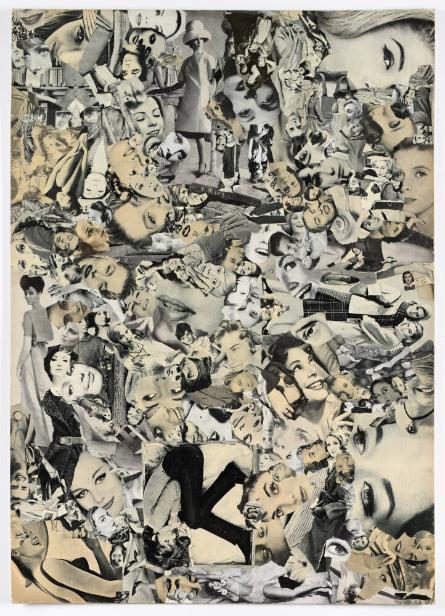
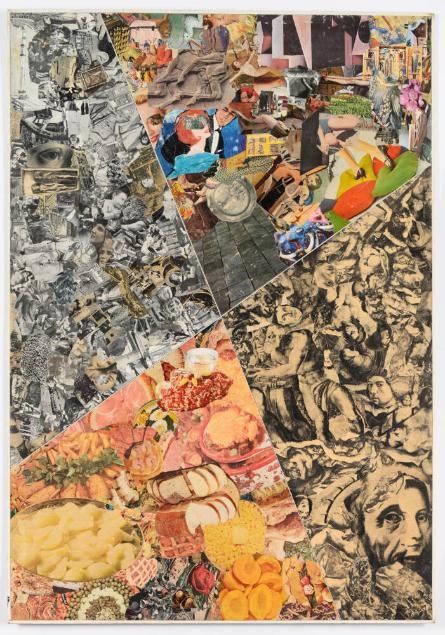
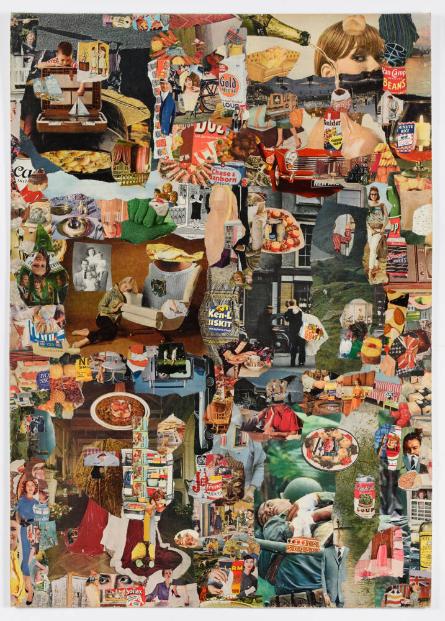
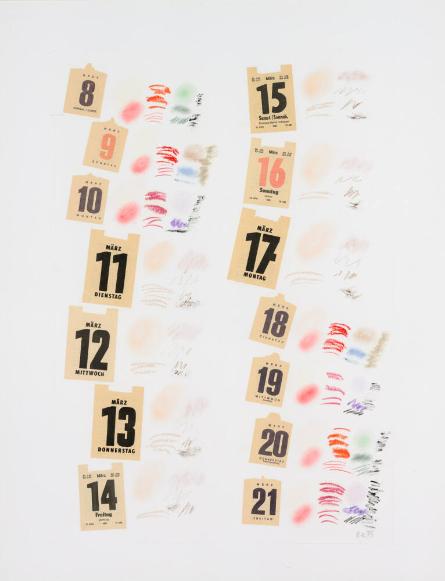
Mademoiselle Rivière
Artist
Jiří Kolář
(1914, Protivín - 2002, Praha), Czech
Original Title
Mademoiselle Rivière
Date1982
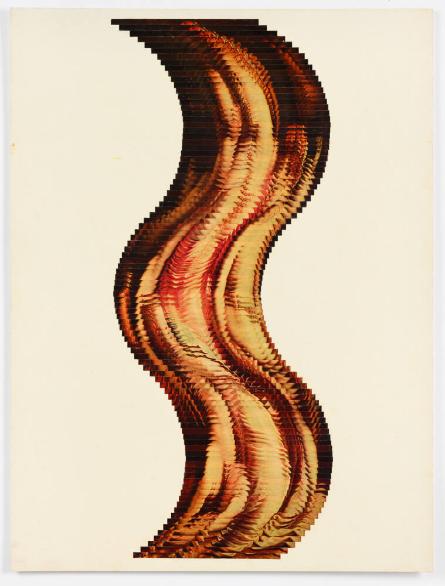
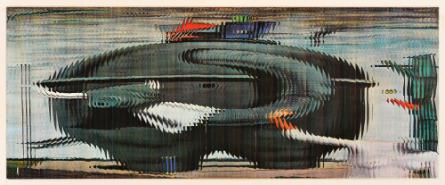
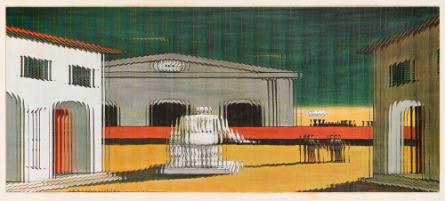
Mediumset of four collages (crumplages) on carboard
Dimensions39 × 29 cm (panel)
Classificationsworks on paper
Credit LineKunsthalle Praha
DescriptionJiří Kolář was a prominent Czech poet and visual artist who received international recognition as early as the 1960s. He entered the art scene during the 1930s, as a poet and writer influenced by surrealism. His first significant works were the journal records Years in Days (1947), which presented a raw, ironic reaction to the most concrete reality of the surrounding world. The concept of daily, regular (journal-based) expression subsequently became an integral part of his lifelong artistic practice. His writings, such as The Genor Clan, Prometheus’s Liver, and The Jubilant Cemetery (all 1950) explored the impact of the Stalinist and Gottwaldian eras on the lives of individuals. Although poetry forms a bedrock of Kolář’s oeuvre, his approach is defined by a rejection of its conventional forms. His definitive split with the spheres of language and literature is represented by the typewritten poetry collection Poems of Silence (1959–1961), which already takes the form of typograms. In the next few years, up until 1963, Kolář’s gradually abandoned from writing. During this period, he moved toward creating visual imagery in which he channelled his poetic ability to create metaphors, as well as his inclination toward destroying original wholes and subsequently reassembling them in collages. His visual experiments also positioned him as one of the artists who managed to rid art of its post-war existentialist ballast. Collages became Kolář’s primary medium of artistic expression. He usually made them by cutting or tearing up and subsequently recomposing colour prints of old and new images, as well as reportage and fashion photographs, using this process to shape a multifaceted analysis of the surrounding world. In his early collages, Kolář created new types of confrontations (confrontages and reportages, 1950–1951), frequently incorporating and appropriating classical art imagery and prominent visual motifs from human history. The loss of such material’s original meaning is a natural part of this creative process, which simultaneously offers the chance to construct new pictorial realities that function as parables of the contemporary state of affairs. The viewer’s understanding of these works and their origins is also significantly influenced by their titles. Kolář’s protean, multivocal artistic practice draws influences from existentialism, letterism, neo-constructivism, and New Sensitivity while also anticipating the postmodern principles of quotation, postproduction, and appropriation. Between 1959 and 1963, Kolář developed a range of new collage techniques— dubbed, for instance, rollage, chiasmage, muchllage, prollage —which helped him create varied imagery from raw visual materials throughout the following decades. From the mid-1960s onwards, Kolář also made three-dimensional collages incorporating mundane, meagre objects related to his childhood. In his Týdeníky (Weeklies), published between 1967 and 1968, he commented on the important events of the past week. These publications combined different types of materials and information, thus presenting a three-dimensional image of the contemporary milieu.
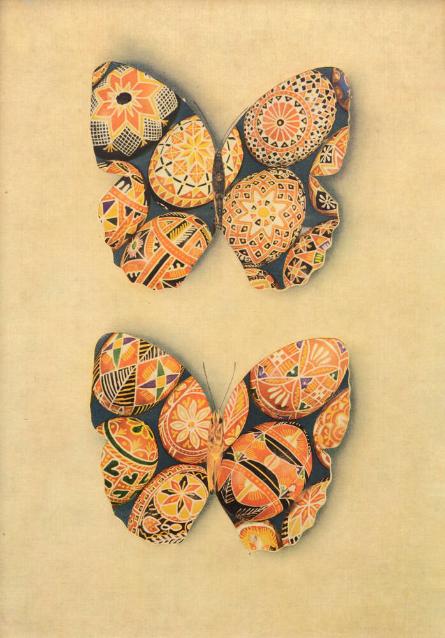
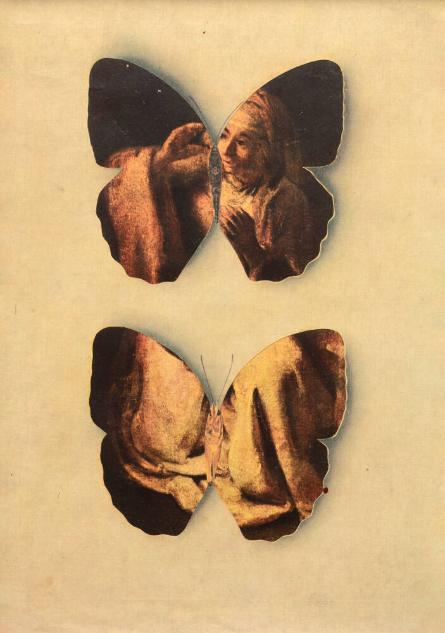
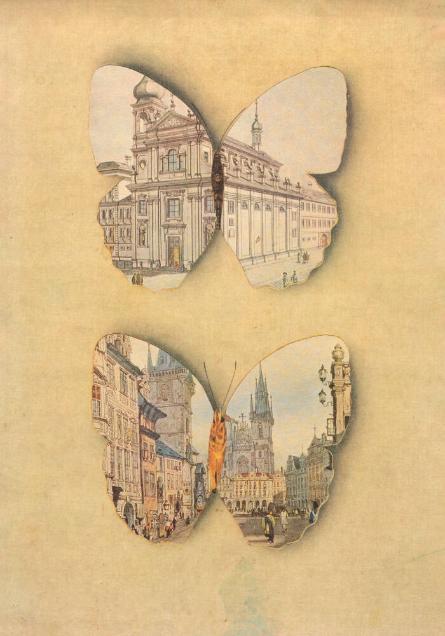
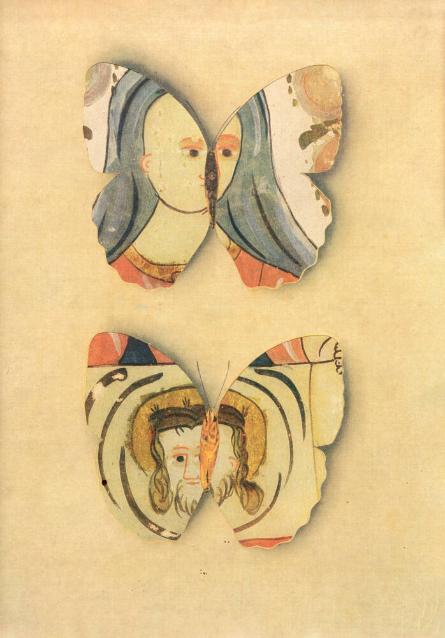
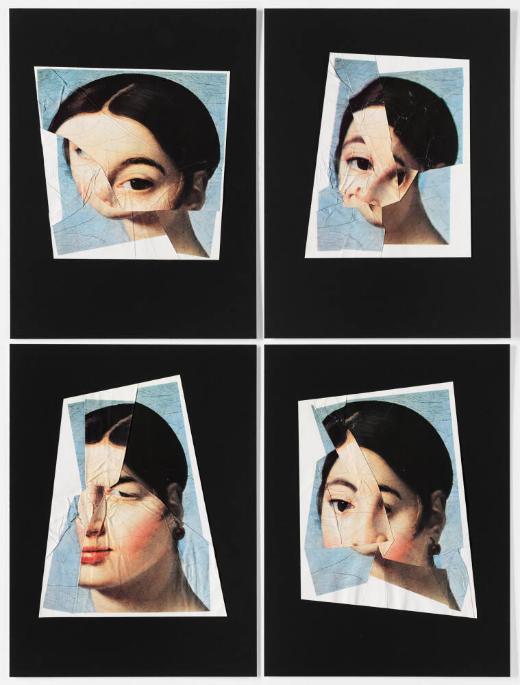
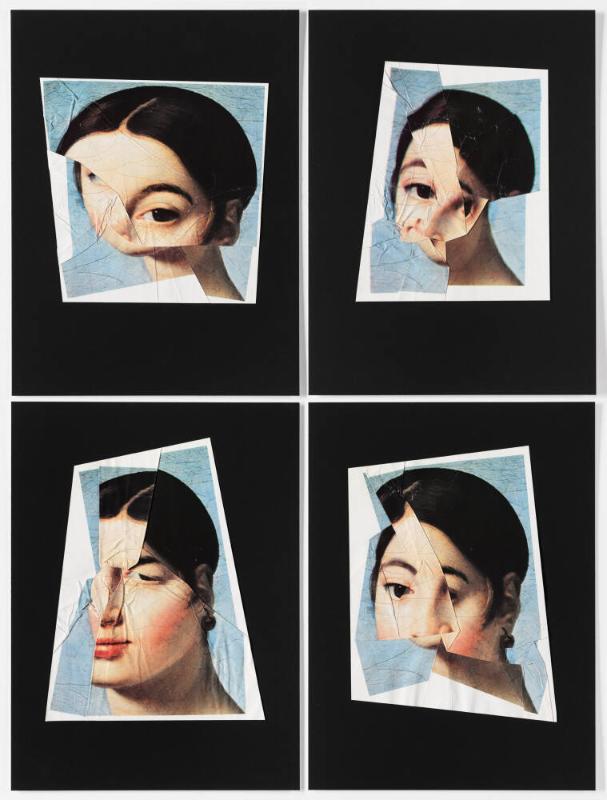
Mademoiselle Riviére (1982) is an example of Kolář’s muchllage technique, which entailed creasing the original visual materials in various ways and subsequently fixing them (often in multiple copies) onto a mat. For his muchllages, Kolář usually selected iconic female portraits from art history that could be understood as representing the canonical beauty of their time. This portrait of Mademoiselle Caroline Riviére (Louvre, Paris), the daughter of a successful Napoleon-era court bureaucrat, was made by French neoclassical painter Jean-Auguste-Dominique Ingres. Mademoiselle Riviére was between thirteen and fifteen years old at the time. Ingres’s gentle portrait, with its softly contoured body and ivory-toned skin, referenced the stylization of figurative paintings by Renaissance artists such as Leonardo da Vinci, as well as the religious motifs portrayed by Dutch late-Gothic artists. The muchllage technique, resulting in the deformation of the charming face across four prints, encourages viewers to contemplate the qualities of the original image. Other works from this series present different iconic images associated with feminine beauty; the deformation of these faces, which evokes cubist deformations of shape, represented an homage to the original canvases. In these collages, Kolář demonstrates that, beyond conventional, superficial beauty, we can also find beauty in difference and unusualness. Hence, this work does not lose its topicality in the present: it questions the limits of feminine beauty and the shifting perceptions of it throughout different times.
Jiří Kolář (1914, Protivín – 2002, Prague) spent his youth in Kladno. A self-taught artist, Kolář initially trained as a joiner and later spent time working as a manual labourer. He first exhibited his collages in 1937, on the corridor walls of the E. F. Burian Theatre in Prague. These works were based on the concept of liberated words, which intentionally negate established syntactic relations and logical units of meaning. He became a member of the Czech wartime art group Group 42, whose programmatic focus on the urban periphery was set out in Jinřích Chalupecký’s essay The World We Live In (1940). Kolář joined the group as a poet, and his poems from this time (Odes and Variations, 1941–1944; Limb and Other Poems, 1944–1945) can be understood as manifestos of the group’s aesthetics. In 1949, he married Běla Helclová (Kolářová), who would become a famous artist and photographer. In 1953, Kolář was arrested by the State Security Service for his work Prometheus’s Livera—the culmination of his tumultuous relationship with the Communist Party of Czechoslovakia. He subsequently spent the 1950s in forced cultural isolation, without contact with contemporary and international affairs. In 1963, he co-founded the art group Křižovatka (Crossroads), which had its debut exhibition in the same year at the Václav Špála Gallery. Kolář later had a solo exhibition at the gallery in 1968. In the latter half of the 1960s, he primarily exhibited abroad, particularly in Germany, Switzerland, France, and the USA. During this time, his work featured in important exhibitions such as Between Poetry and Painting (Institute of Contemporary Art, London, 1965), Tschechoslowakische Kunst der Gegenwart (Contemporary Czechoslovak Art) (Akademie der Künste, Berlin, 1966), documenta 4 v Kasselu (1968), the Expo 70 – Czechoslovak Pavillion (Osaka, 1970), the 35th Venice Biennale (1970), and Documenta 6 in Kassel (1977). The most significant presentations of his work included solo exhibitions at the Solomon R. Guggenheim Museum in New York in 1975 and 1979, the Centre Georges Pompidou in Paris in 1983, and the Museo Nacional Centro de Arte Reina Sofia in 1996. Despite his international success, Kolář could not exhibit in Czechoslovakia during the 1970s and 1980s, and no books about his work were published. In 1970, he suffered a stroke, leaving half of his body temporarily paralyzed. After recovering, he returned to making art. In 1977, Kolář signed Charter 77 and was consequently banned from working in Czechoslovakia. Between 1979 and 1980, he spent a year in West Berlin thanks to the DAAD residency programme, subsequently emigrating to Paris. In 1982, he was sentenced in absentia to a year of jail in Czechoslovakia and loss of property. Two years later, in 1982, he received French citizenship. In (former) Czechoslovakia, his work was only first presented in 1993, when the National Gallery Prague hosted a retrospective exhibition of his work at the Kinský Palace. Notable recent retrospectives have included Jiří Kolář: Grimace of the Century, Kinský Palace, Prague (2018) and Jiří Kolář: Forms of Visual Poetry, From the Collection of Museum Kampa (American University Museum, Katzen Arts Center, Washington D. C., 2019). After the Velvet Revolution in 1989, Kolář began to engage with the cultural life of the Czech Republic, eventually moving back to Prague in 1997. In 1990, Jiří Kolář, Václav Havel, and Theodor Pištěk co-founded the Jindřich Chalupecký Award for artists under the age of 35.
Mademoiselle Riviére (1982) is an example of Kolář’s muchllage technique, which entailed creasing the original visual materials in various ways and subsequently fixing them (often in multiple copies) onto a mat. For his muchllages, Kolář usually selected iconic female portraits from art history that could be understood as representing the canonical beauty of their time. This portrait of Mademoiselle Caroline Riviére (Louvre, Paris), the daughter of a successful Napoleon-era court bureaucrat, was made by French neoclassical painter Jean-Auguste-Dominique Ingres. Mademoiselle Riviére was between thirteen and fifteen years old at the time. Ingres’s gentle portrait, with its softly contoured body and ivory-toned skin, referenced the stylization of figurative paintings by Renaissance artists such as Leonardo da Vinci, as well as the religious motifs portrayed by Dutch late-Gothic artists. The muchllage technique, resulting in the deformation of the charming face across four prints, encourages viewers to contemplate the qualities of the original image. Other works from this series present different iconic images associated with feminine beauty; the deformation of these faces, which evokes cubist deformations of shape, represented an homage to the original canvases. In these collages, Kolář demonstrates that, beyond conventional, superficial beauty, we can also find beauty in difference and unusualness. Hence, this work does not lose its topicality in the present: it questions the limits of feminine beauty and the shifting perceptions of it throughout different times.
Jiří Kolář (1914, Protivín – 2002, Prague) spent his youth in Kladno. A self-taught artist, Kolář initially trained as a joiner and later spent time working as a manual labourer. He first exhibited his collages in 1937, on the corridor walls of the E. F. Burian Theatre in Prague. These works were based on the concept of liberated words, which intentionally negate established syntactic relations and logical units of meaning. He became a member of the Czech wartime art group Group 42, whose programmatic focus on the urban periphery was set out in Jinřích Chalupecký’s essay The World We Live In (1940). Kolář joined the group as a poet, and his poems from this time (Odes and Variations, 1941–1944; Limb and Other Poems, 1944–1945) can be understood as manifestos of the group’s aesthetics. In 1949, he married Běla Helclová (Kolářová), who would become a famous artist and photographer. In 1953, Kolář was arrested by the State Security Service for his work Prometheus’s Livera—the culmination of his tumultuous relationship with the Communist Party of Czechoslovakia. He subsequently spent the 1950s in forced cultural isolation, without contact with contemporary and international affairs. In 1963, he co-founded the art group Křižovatka (Crossroads), which had its debut exhibition in the same year at the Václav Špála Gallery. Kolář later had a solo exhibition at the gallery in 1968. In the latter half of the 1960s, he primarily exhibited abroad, particularly in Germany, Switzerland, France, and the USA. During this time, his work featured in important exhibitions such as Between Poetry and Painting (Institute of Contemporary Art, London, 1965), Tschechoslowakische Kunst der Gegenwart (Contemporary Czechoslovak Art) (Akademie der Künste, Berlin, 1966), documenta 4 v Kasselu (1968), the Expo 70 – Czechoslovak Pavillion (Osaka, 1970), the 35th Venice Biennale (1970), and Documenta 6 in Kassel (1977). The most significant presentations of his work included solo exhibitions at the Solomon R. Guggenheim Museum in New York in 1975 and 1979, the Centre Georges Pompidou in Paris in 1983, and the Museo Nacional Centro de Arte Reina Sofia in 1996. Despite his international success, Kolář could not exhibit in Czechoslovakia during the 1970s and 1980s, and no books about his work were published. In 1970, he suffered a stroke, leaving half of his body temporarily paralyzed. After recovering, he returned to making art. In 1977, Kolář signed Charter 77 and was consequently banned from working in Czechoslovakia. Between 1979 and 1980, he spent a year in West Berlin thanks to the DAAD residency programme, subsequently emigrating to Paris. In 1982, he was sentenced in absentia to a year of jail in Czechoslovakia and loss of property. Two years later, in 1982, he received French citizenship. In (former) Czechoslovakia, his work was only first presented in 1993, when the National Gallery Prague hosted a retrospective exhibition of his work at the Kinský Palace. Notable recent retrospectives have included Jiří Kolář: Grimace of the Century, Kinský Palace, Prague (2018) and Jiří Kolář: Forms of Visual Poetry, From the Collection of Museum Kampa (American University Museum, Katzen Arts Center, Washington D. C., 2019). After the Velvet Revolution in 1989, Kolář began to engage with the cultural life of the Czech Republic, eventually moving back to Prague in 1997. In 1990, Jiří Kolář, Václav Havel, and Theodor Pištěk co-founded the Jindřich Chalupecký Award for artists under the age of 35.