Robert Filliou
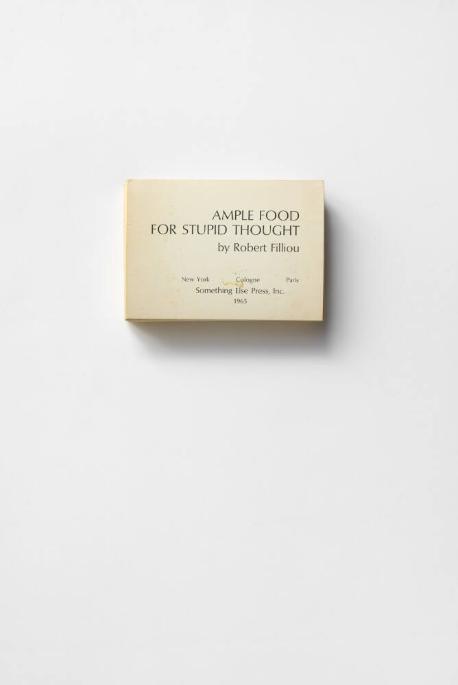
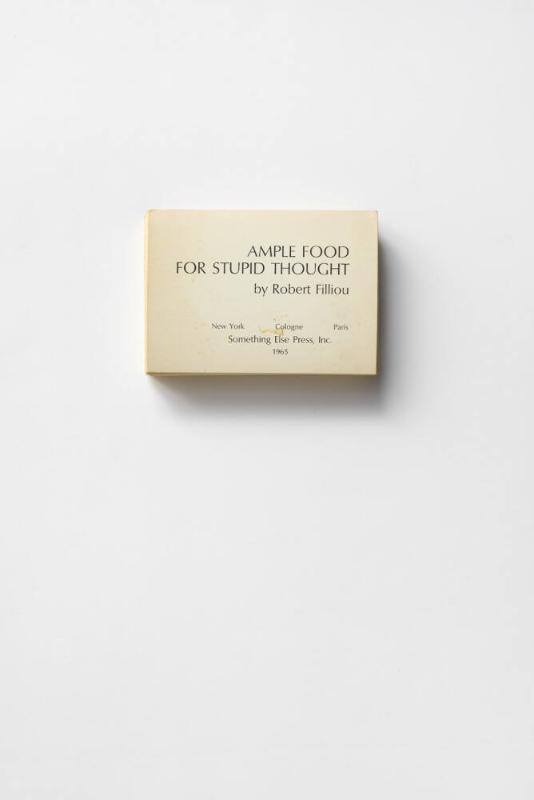
Ample Food for Stupid Thought
Artist
Robert Filliou
Original Title
Ample Food for Stupid Thought
Date1965
Medium96 offset postcards
Publisher: Something Else Press, Inc., Dick Higgins, New York, Cologne, Paris; Edition 500 (104 boxed)
Dimensions12,8 × 17,8 cm
ClassificationsFlux Papers
Credit LineKunsthalle Praha (Marie and Milan Knížák Fluxus Collection)
DescriptionRobert Filliou was an innovative French artist, director, sculptor, and creator of multiples and happenings. He often worked with meagre materials (nails, wire) while also considering mood an important component of his artworks. His approach to objects evidences his admiration of Marcel Duchamp. Filliou was associated with the New Realism of the 1960s and 1970s. He also took part in events and festivals organized by Fluxus, but never joined the movement. He closely collaborated with artists such as Daniel Spoerri, Dieter Roth, George Brecht, Emmett Williams, and Joachim Pfeufer. In 1962, he met George Maciunas, with whom he shared a desire for anti-individualistic art that could take place anywhere and at any time. Filliou and the Fluxus movement shared a conviction that art and life should be identical, with art therefore stemming directly from life. Filliou’s work combined the principles of various conceptual approaches with innovative techniques based on performance, chance, humour, imagination, and play. Filliou’s art betrays an interest in society, the world as a whole, and the universe; anti-authoritarian and anti-institutional, it addresses questions of political agency and the social ordering of the world, the impact of the Cold War, and the unrest and crisis of capitalist society. Rationalist perspectives blend with a Buddhist, meditative worldview and an emphasis on spiritual values. The evolution of Filliou’s art was significantly influenced by Eastern philosophies and his engagement with Zen Buddhism, which he became further acquainted with while staying in Japan and South Korea. Consequently, magical, mystical, and religious elements became an integral part of his work, employed as keys to understanding the world. He approached art as a game, using games as a medium through which he drew the viewer into the artwork, creating a dialogue between the two. Filliou and his collaborators developed several concepts that he proceeded to gradually develop in his work. The idea of the Eternal Network, connecting like-minded people around the world, became an important impulse for the mail art movement. The principle of Permanent Creation was based on creativity and awareness that everything already is somewhere and exists somewhere, and all that is necessary is to realize an already existing thought. Filliou first presented the fruits of his “visual poetry” in 1960, at the Festival d´Art d´Avant-Garde in Paris. In the same year, he created his first collage, titled L'Immortelle Mort du Monde (The Deathless Dying of the World), which he dedicated to his friend, artist Daniel Spoerri. The work comprised a visual and textual script for a theatre play, arranged into a grid, where various individual experiences are juxtaposed, forming the basis for his performance. The combination of the emotional, philosophical, and banal elements also evidences the lasting influence of existentialism within the French avantgarde art scene. In 1963, Filliou and architect Joachim Pfeufer developed a project titled POIPOIDROM, which was based on combining the mediums of object, installation, and performance. In 1972, they presented the project at Documenta 5. Filliou’s most significant works, which explore the concept of time, were created during his time in Düsseldorf (1968–1974). Shortly after moving away, he began a collaboration with Galerie Schmela, as part of which he elaborated his Principle of Equivalence; together with George Brecht, he also realized his first film composed of one-minute scripts. The Principle of Equivalence also shaped the name of one of his artworks created in 1969 (Das Prinzip der Gleichwertigkeit / Principe d´équivalence avec cercle et ronds), which comprises three yellow boxes and red socks, meant to represent the idea of the Principle of Equivalence. This idea would continue to shape many of his other works in the coming years. It would also influence his portrait paintings, which only contained the name of the person portrayed and a stamp reading “gut gemacht, schlecht gemacht, nicht gemacht” (“well done, badly done, not done”). These works were meant to convey the idea that quality does not play a role in art. In Filliou’s mind, good art was not everything—and bad art was still art. Another important series of works were his Optimistic Boxes (1968–1981), which evidenced his pacifist worldview, as well as his humour and his appreciation of Marcel Duchamp. In the early 1970s, Filliou produced a series of works (including assemblages, drawings, and social games) with titles such as The Mad Feeling, That Vocational Game, and That Spiritual Need, in which he employed various alternative understandings of art. His last work, titled Time in a Nutshell (1987), was created during his three-year-long stay in a monastery and represents the finiteness of time.
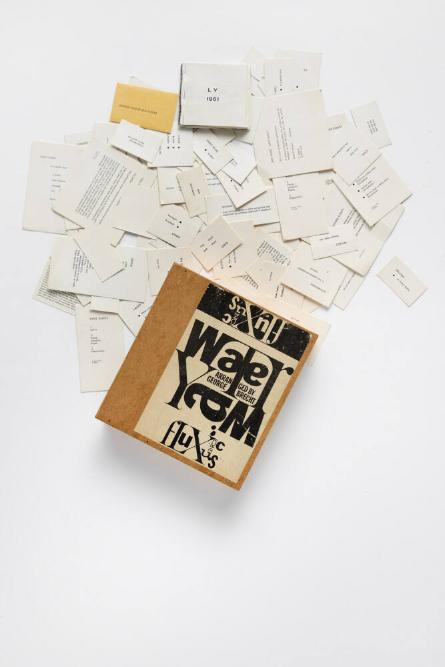
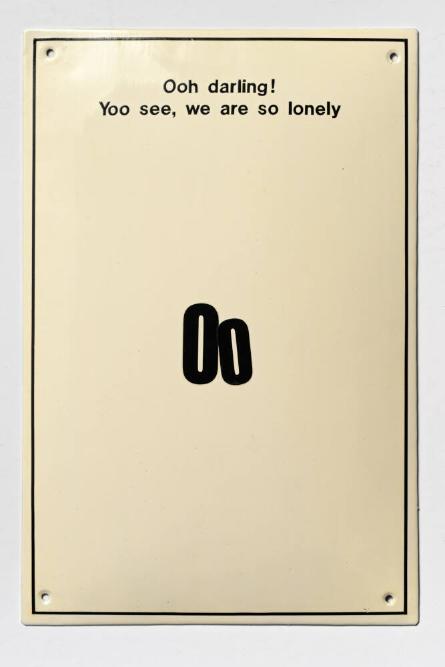
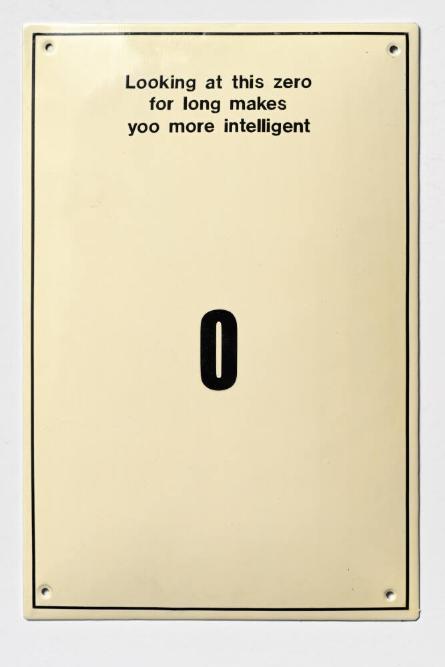
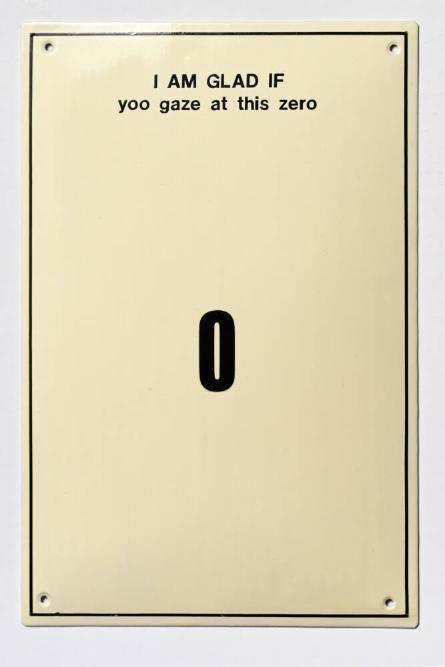
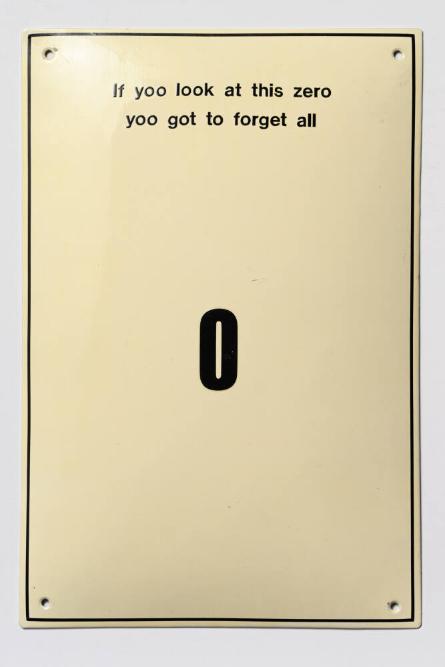
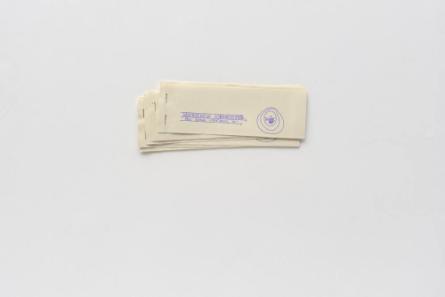
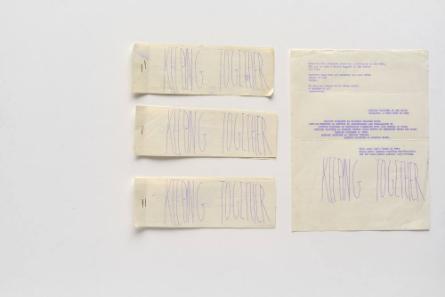
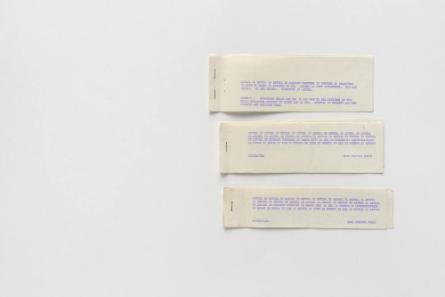
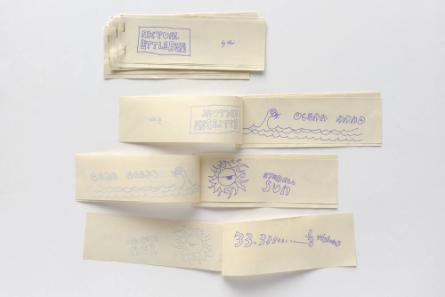
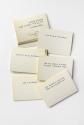
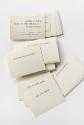
This set of cards titled Ample Food for Stupid Thought (1965) comprises 96 offset cards containing short texts. These texts provide instructions for events, which were inspired by music in that they could be realized by anyone. Anyone who decides to do so is simultaneously creating a new interpretation of the event, and therefore reviving it and taking part in the creative artistic process without needing any professional artistic background. The nature of the instructions betrays extensive inspiration in situations from everyday life. Consequently, it is possible to perform them in everyday situations as well as through performances, thus spotlighting the interconnection between art and life. Filliou dedicated the set of cards to his friend and artistic colleague George Brecht. The introductory text lists the following artists as its authors: Daniel Spoerri, Arman, Kichka Baticheff, George Brecht, William Burroughs, Christo, Diane di Prima, Brion Gysin, Dick Higgins, Allan Kaprow, Ray Johnson, Joe Jones, Alison Knowles, John Herbert McDowell, Jackson Mac Low, Nam June Paik, Benjamin Patterson, Dieter Rot and James Waring.
Robert Filliou (1926, Sauve – 1987, Les Eyzies-de-Tayac-Sireuil) was an influential French artist. In 1943, he became a member of the French Communist Party. After World War II, he moved to the USA, where he worked for Coca-Cola while doing a master’s degree in economics at the University of California, Los Angeles. After completing his studies, Filliou moved to South Korea, where he worked as part of the UN agency putting together a five-year plan for the reconstruction and development of the country. Nevertheless, Filliou primarily saw himself as a poet; his lifelong artistic practice can therefore be understood as a concentrated poetic account of everything he experienced in different stages of his life. During the 1950s, he was an active writer, penning action poems and longer plays. During these years, he lived in Japan, Egypt, Spain, the Netherlands, and Denmark before moving back to France in 1959. In 1962, he founded the Galerie Légitime, located in his hat, which presented small works by Filliou and Fluxus artists. In the same year, he took part in the Fluxus Internationale Festspiele Neueste Musik music festival in Wiesbaden. Together with George Brecht, they opened the bizarre shop La Cedille Qui Sourit in southern France, which served as a gathering space for Fluxus artists as well as hosting exhibitions, events, and projects. After closing the shop due to financial reasons, Filliou visited New York in 1967. From 1968 to 1974, he lived in Düsseldorf—a focal point of Fluxus activities—where he worked in creative dialogue with Joseph Beuys, Marcel Broodthaers, Dieter Roth, and Daniel Spoerri. In 1970, he published a multi-book titled Teaching and Learning as Performing Arts, which contained many of his radical ideas regarding participative art and education with emphasis on the viewer’s communication and involvement. During his time in Düsseldorf, Filliou created his most significant artworks, which he successively presented as part of three exhibitions at Galerie Schmela: Création Permanente – Principe d´Equivalence, also gut gemacht, schlecht gemacht, nicht gemacht (1969), A Joint Work of Robert Filliou (1970), and Research in Futurology (1972). During this period, he also began receiving invitations to international exhibitions, with his work beginning to garner international recognition. In 1971, he pronounced the Stedelijk Museum in Amsterdam as the First Territory of the Genial Republic. This work saw him stay at the museum for 23 days, speaking to visitors. In the hand-written accompanying catalogue titled Research at the Stedelijk, he wrote that “research is not the privilege of those who know, but the domain of those who don’t know”. In 1973, Filliou took part in the legendary Festival Aktionen der Avantgarde, where he presented his environment for Telepathic Music on the rooftop of the Academy of Arts in West Berlin. He also took part in the 36th Venice Biennale (1972) and Documenta 5 and 6 in Kassel (1972, 1977), as well as organising large-scale events, such as the 1.000.010th Birthday of Art in Aachen (1973). In 1974, Filliou was awarded the year-long DAAD scholarship, allowing him to stay in Western Berlin. He subsequently moved to France, and from 1977 also lived part-time in Canada, where he worked as a video producer while also using video to document his own work and events. From 1980 to 1984, he was a visiting professor at the Hochschule für bildende Künste in Hamburg. In 1981, his work was featured in the exhibition Westkunst. Zeitgenössische Kunst seit 1939 (Western Art. Contemporary Art Since 1939; Cologne), which focused on the theme of freedom and individual expression. In 1982, he was awarded the Kurt Schwitters Prize by the City of Hanover. Filliou’s first major retrospective exhibition took place in 1984 at the Sprengel Museum in Hanover, subsequently showing at the Musée d´Art Moderne de la Ville de Paris and Kunsthalle Bern. In October 1984, led by his affinity for Zen Buddhism, he entered the Tibetan monastery Chanteloube in Dordogne, where he stayed for three years, three months, and three days. Shortly after leaving the monastery in 1987, Filliou died of cancer. A posthumous exhibition of his work was held at the Städtische Kunsthalle Düsseldorf. Today, his work is included in the collections of prominent institutions such as the Gina di Maggio in Milan, the Mumok – Museum moderner Kunst in Vienna, the Museum of Modern Art in New York, and the Centre Georges Pompidou in Paris.
This set of cards titled Ample Food for Stupid Thought (1965) comprises 96 offset cards containing short texts. These texts provide instructions for events, which were inspired by music in that they could be realized by anyone. Anyone who decides to do so is simultaneously creating a new interpretation of the event, and therefore reviving it and taking part in the creative artistic process without needing any professional artistic background. The nature of the instructions betrays extensive inspiration in situations from everyday life. Consequently, it is possible to perform them in everyday situations as well as through performances, thus spotlighting the interconnection between art and life. Filliou dedicated the set of cards to his friend and artistic colleague George Brecht. The introductory text lists the following artists as its authors: Daniel Spoerri, Arman, Kichka Baticheff, George Brecht, William Burroughs, Christo, Diane di Prima, Brion Gysin, Dick Higgins, Allan Kaprow, Ray Johnson, Joe Jones, Alison Knowles, John Herbert McDowell, Jackson Mac Low, Nam June Paik, Benjamin Patterson, Dieter Rot and James Waring.
Robert Filliou (1926, Sauve – 1987, Les Eyzies-de-Tayac-Sireuil) was an influential French artist. In 1943, he became a member of the French Communist Party. After World War II, he moved to the USA, where he worked for Coca-Cola while doing a master’s degree in economics at the University of California, Los Angeles. After completing his studies, Filliou moved to South Korea, where he worked as part of the UN agency putting together a five-year plan for the reconstruction and development of the country. Nevertheless, Filliou primarily saw himself as a poet; his lifelong artistic practice can therefore be understood as a concentrated poetic account of everything he experienced in different stages of his life. During the 1950s, he was an active writer, penning action poems and longer plays. During these years, he lived in Japan, Egypt, Spain, the Netherlands, and Denmark before moving back to France in 1959. In 1962, he founded the Galerie Légitime, located in his hat, which presented small works by Filliou and Fluxus artists. In the same year, he took part in the Fluxus Internationale Festspiele Neueste Musik music festival in Wiesbaden. Together with George Brecht, they opened the bizarre shop La Cedille Qui Sourit in southern France, which served as a gathering space for Fluxus artists as well as hosting exhibitions, events, and projects. After closing the shop due to financial reasons, Filliou visited New York in 1967. From 1968 to 1974, he lived in Düsseldorf—a focal point of Fluxus activities—where he worked in creative dialogue with Joseph Beuys, Marcel Broodthaers, Dieter Roth, and Daniel Spoerri. In 1970, he published a multi-book titled Teaching and Learning as Performing Arts, which contained many of his radical ideas regarding participative art and education with emphasis on the viewer’s communication and involvement. During his time in Düsseldorf, Filliou created his most significant artworks, which he successively presented as part of three exhibitions at Galerie Schmela: Création Permanente – Principe d´Equivalence, also gut gemacht, schlecht gemacht, nicht gemacht (1969), A Joint Work of Robert Filliou (1970), and Research in Futurology (1972). During this period, he also began receiving invitations to international exhibitions, with his work beginning to garner international recognition. In 1971, he pronounced the Stedelijk Museum in Amsterdam as the First Territory of the Genial Republic. This work saw him stay at the museum for 23 days, speaking to visitors. In the hand-written accompanying catalogue titled Research at the Stedelijk, he wrote that “research is not the privilege of those who know, but the domain of those who don’t know”. In 1973, Filliou took part in the legendary Festival Aktionen der Avantgarde, where he presented his environment for Telepathic Music on the rooftop of the Academy of Arts in West Berlin. He also took part in the 36th Venice Biennale (1972) and Documenta 5 and 6 in Kassel (1972, 1977), as well as organising large-scale events, such as the 1.000.010th Birthday of Art in Aachen (1973). In 1974, Filliou was awarded the year-long DAAD scholarship, allowing him to stay in Western Berlin. He subsequently moved to France, and from 1977 also lived part-time in Canada, where he worked as a video producer while also using video to document his own work and events. From 1980 to 1984, he was a visiting professor at the Hochschule für bildende Künste in Hamburg. In 1981, his work was featured in the exhibition Westkunst. Zeitgenössische Kunst seit 1939 (Western Art. Contemporary Art Since 1939; Cologne), which focused on the theme of freedom and individual expression. In 1982, he was awarded the Kurt Schwitters Prize by the City of Hanover. Filliou’s first major retrospective exhibition took place in 1984 at the Sprengel Museum in Hanover, subsequently showing at the Musée d´Art Moderne de la Ville de Paris and Kunsthalle Bern. In October 1984, led by his affinity for Zen Buddhism, he entered the Tibetan monastery Chanteloube in Dordogne, where he stayed for three years, three months, and three days. Shortly after leaving the monastery in 1987, Filliou died of cancer. A posthumous exhibition of his work was held at the Städtische Kunsthalle Düsseldorf. Today, his work is included in the collections of prominent institutions such as the Gina di Maggio in Milan, the Mumok – Museum moderner Kunst in Vienna, the Museum of Modern Art in New York, and the Centre Georges Pompidou in Paris.