Ken Friedman
Keeping Together, Aktual Is Actual...
Artist
Ken Friedman
Original Title
Keeping Together, Aktual Is Actual...
Datenot dated
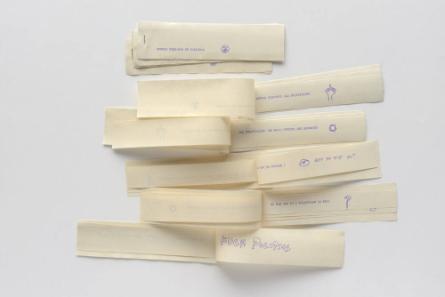
Mediumauthor's book – print on paper and metal staples
Dimensions7,4 × 21,6 cm
ClassificationsFlux Papers
Credit LineKunsthalle Praha (Marie and Milan Knížák Fluxus Collection)
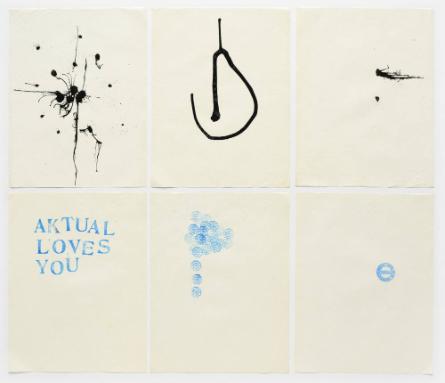
DescriptionKen Friedman is a central figure of the Fluxus movement. He has worked closely with other prominent Fluxus artists, such as George Maciunas, Dick Higgins, Nam June Paik, John Cage, Joseph Beuys, and Milan Knížák, and was also part of the mail art movement. Alongside these artistic activities, he also pursued an academic career, and became the main historian of Fluxus and intermedia theory. Friedman became Fluxus’s youngest member after being invited to join the movement by George Maciunas, whose eye he had caught with his events, in 1966. Only following his meeting with Maciunas did Friedman begin to consider his own work—which took the form of written instructions (referred to as scores) prompting the viewer to engage in various actions (called events)—as art. These pieces included simple instructions, guidelines for activities, and rhetorical questions. Friedman’s work invited the audience to take part in events that transcended traditional perceptions of art, leaving the final artwork in the hands and mind of its viewers. In this way, he transformed the traditional relationship between the viewer and the artwork, expanding the viewer’s contact with art into an experiential dimension. Written instructions represent a fluid, hybrid art form, blending elements of sculpture, concrete poetry, and absurdist events. Through these printed instructions, referred to as propositions, Friedman put forth a range of events that could be completed by anyone; in other cases, he invited professionals such as musicians and performers to work outside of or against the restrictions imposed by their medium’s conventions. Macunias named him as director of Fluxus West, with the intention of presenting Fluxus’s activities on the west coast of the USA, and during the late 1960s and 1970s, Friedman expanded his artistic activity to Germany and Great Britain. He and the rest of Fluxus shared an anti-materialistic, anti-elitist, collaborative approach to art. His own style was defined by a playful approach focused on the strange and absurd. Like many other Fluxus members, Friedman was interested in creating an opposition to the majority art world and its rigid disciplinary boundaries. He created conceptual works, centred on actions and language, which engaged with everyday life and challenged the idea of the artwork as a unique object. His event exhibitions were easily multipliable and could therefore be presented in many places at the same time. Some of his early events also betrayed an interest in Zen Buddhism, sound, and silence, resulting from his long-term interest in history, science, and spirituality. His work also drew on the legacy of Duchamp’s readymades, as evidenced by Open and Shut Case (1965)—a box with “Open me” printed on the outside and “Shut me quick” on the inside. Maciunas later published the box as a Fluxus multiple. The box was also converted into the form of written instructions, illustrating the interlinking of different forms of expression through a single idea. In 1967, while based in California, Friedman initiated a long-distance collaboration with Milan Knížák and the Aktual group. Together, they also organized what they termed Keeping Together Days, conceived as a reaction to a lack of cultural freedom. Their joint activities waned with the beginning of the Normalisation era in Czechoslovakia, which prevented further collaboration and communication.
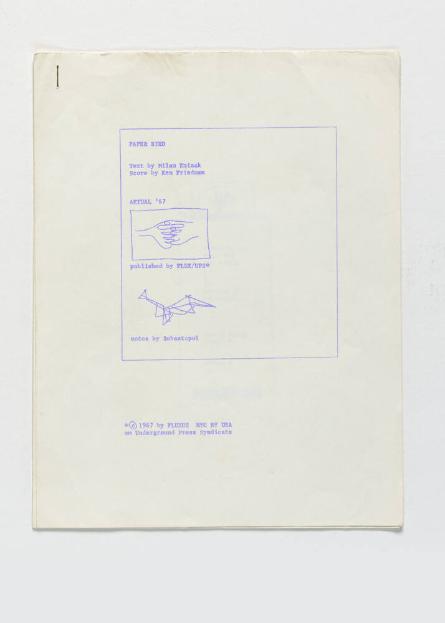
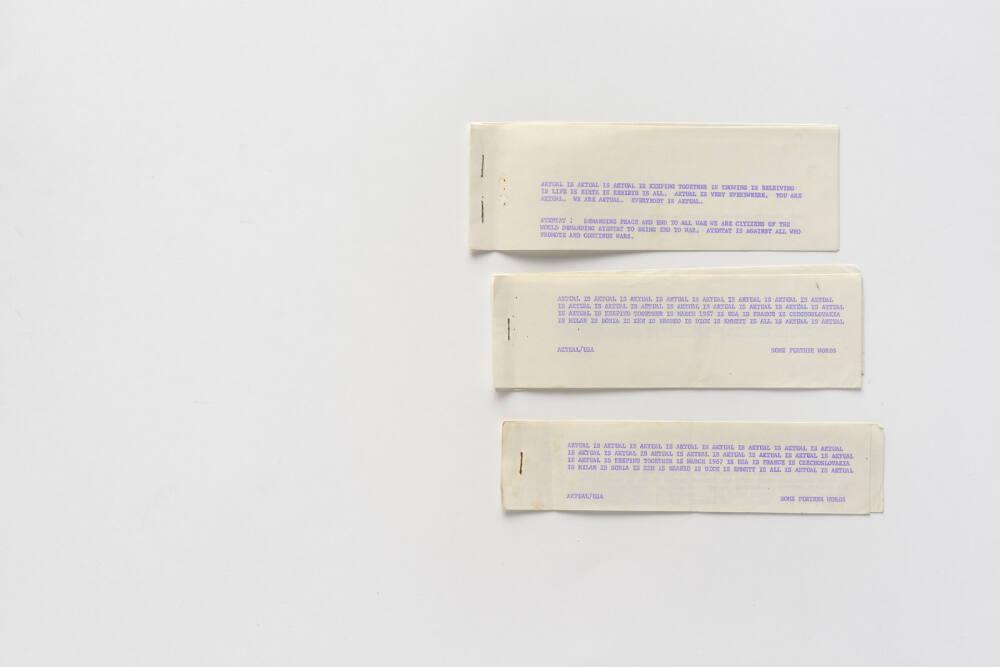
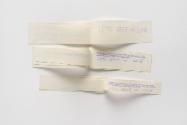
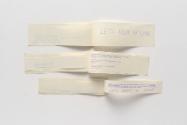
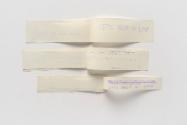
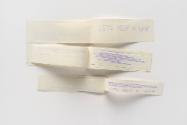
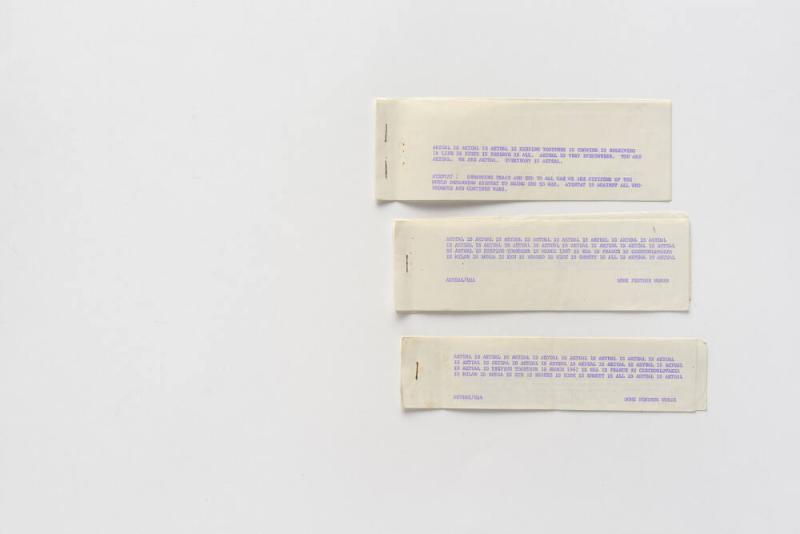
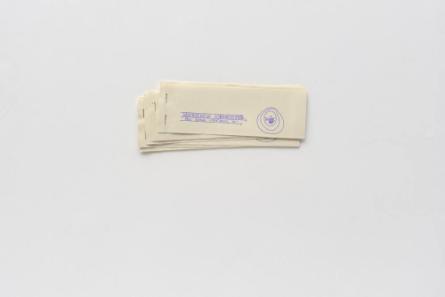
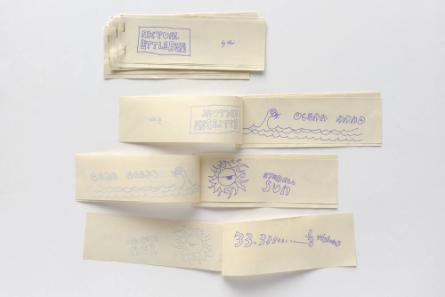
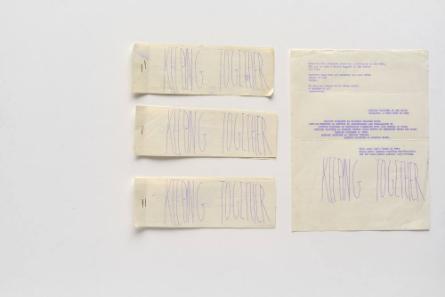
Keeping Together, Aktual Is Aktual … (1967) is one of many brochures and small printed materials produced by Aktual USA. Its content is introduced by a long, repetitive message that playfully emphasizes actuality and mutuality. The stream of words contains the names Milan (Knížák), Sonia (Švecová), Ken (Friedman), Branko (Vučićević), Dick (Higgins), and Emmet (Williams), demonstrating the mutual interconnectedness of artists associated with the Aktual and Fluxus movements, active in different places across the world and connected by a belief in mutuality and friendly artistic dialogue. The brochure also reports that during the week of its publication, Aktual USA had presented seven Fluxus Instant Theatre performances and other movement-based events to tens of thousands of people. It advocates mutual contact via various events and an awareness of the fact that everyone is actual (actual) and should keep together while also each having the right to do what they wish. The text seeks to illustrate that every individual has the capacity to instigate positive change and to spread love, togetherness, and positive values.
Ken Friedman (1949, New London, Connecticut) is an important American artist who is also active in academia. As a child, he visited the Yale University Art Museum in New Haven with its collection of classical art and antiquities every week, but he also developed an interest in modern art. The Museum hosted a temporary exhibition of Leonardo da Vinci, featuring his technological sketches and modern reconstructions of his inventions, which would later inspire Friedman to create experimental objects and study the ways things function. Between 1965 and 1966, he studied music theory and composition at Shimer College in Illinois, and in 1971 he received a master’s degree in Interdisciplinary Studies—focusing on education, psychology, and social science—from San Francisco State University. In 1976, he completed a doctorate at the Graduate School of Human Behaviour, part of the United States International University. Friedman never received a formal artistic education—it was only Goerge Maciunas who labelled his activities as art in 1966, naming him director of Fluxus West. In the same year, Friedman had his first solo exhibition in New York. In the early 1970s, he was the managing director of Dick Higgins’s publishing house Something Else Press. Throughout his active artistic career, Friedman was primarily based in California, before moving to New York in the 1980s. During the 1990s, he launched his academic career and moved to Norway, where he was appointed Professor of Leadership and Strategic Design at the Norwegian School of Management in Oslo. His interdisciplinary research spanned fields such as construction theory, methodological research, philosophy of design, design education, management, and philosophy of science. Friedman’s interest in design, particularly in relation to the corporate and communal spheres, stemmed from a conviction that design shapes the world. He later spent several years in Australia as Dean of the Faculty of Design at Swinburne University of Technology in Melbourne. Friedman is currently Professor Emeritus at Swinburne University and Chair Professor of Design Innovation Studies at Tongji University in Shanghai. He has also extensively worked as an editor: he is currently editor-in-chief of She Ji: The Journal of Design, Economics, and Innovation, published by Elsevier in cooperation with Tongji University Press, as well as co-editor of the Design Thinking, Design Theory book series, published by The MIT Press. Since 2014, Friedman has been living in the Swedish city of Kalmar. He also formerly worked as the historian and archivist of Fluxus. In 1998, his monumental work The Fluxus Reader was published, documenting the movement’s history. In recent years, he has returned to making art, through which he seeks new ways of relating to himself. His myriad important exhibitions since the year 2000 have included Ken Friedman Art(net)worker Extraordinaire at the University of Iowa Museum of Art (2000), Twelve Structures at The Centre of Attention in London (2004), Ken Friedman: 99 Events at the Stendhal Gallery in New York (2009), and Ken Friedman: 92 Events at the Kalmar Art Museum in Sweden (2014). Most group exhibitions he has featured in focused on the Fluxus movement. Friedman’s work is included in the collections of renowned institutions such as the Museum of Modern Art and the Guggenheim Museum in New York, the Tate Modern in London, the Hood Museum of Art at Dartmouth College, and the Staatsgalerie Stuttgart. The official repository of his documents and research notes is at the University of Iowa. Other extensive archives of his work are the Silverman Fluxus Collection at the Museum of Modern Art in New York, the Sohm Archive at the Staatsgalerie Stuttgart, and the Mandeville Department of Special Collections at the University of California San Diego. In 2007, Loughborough University awarded him an honorary doctorate for his contributions to design research.
Keeping Together, Aktual Is Aktual … (1967) is one of many brochures and small printed materials produced by Aktual USA. Its content is introduced by a long, repetitive message that playfully emphasizes actuality and mutuality. The stream of words contains the names Milan (Knížák), Sonia (Švecová), Ken (Friedman), Branko (Vučićević), Dick (Higgins), and Emmet (Williams), demonstrating the mutual interconnectedness of artists associated with the Aktual and Fluxus movements, active in different places across the world and connected by a belief in mutuality and friendly artistic dialogue. The brochure also reports that during the week of its publication, Aktual USA had presented seven Fluxus Instant Theatre performances and other movement-based events to tens of thousands of people. It advocates mutual contact via various events and an awareness of the fact that everyone is actual (actual) and should keep together while also each having the right to do what they wish. The text seeks to illustrate that every individual has the capacity to instigate positive change and to spread love, togetherness, and positive values.
Ken Friedman (1949, New London, Connecticut) is an important American artist who is also active in academia. As a child, he visited the Yale University Art Museum in New Haven with its collection of classical art and antiquities every week, but he also developed an interest in modern art. The Museum hosted a temporary exhibition of Leonardo da Vinci, featuring his technological sketches and modern reconstructions of his inventions, which would later inspire Friedman to create experimental objects and study the ways things function. Between 1965 and 1966, he studied music theory and composition at Shimer College in Illinois, and in 1971 he received a master’s degree in Interdisciplinary Studies—focusing on education, psychology, and social science—from San Francisco State University. In 1976, he completed a doctorate at the Graduate School of Human Behaviour, part of the United States International University. Friedman never received a formal artistic education—it was only Goerge Maciunas who labelled his activities as art in 1966, naming him director of Fluxus West. In the same year, Friedman had his first solo exhibition in New York. In the early 1970s, he was the managing director of Dick Higgins’s publishing house Something Else Press. Throughout his active artistic career, Friedman was primarily based in California, before moving to New York in the 1980s. During the 1990s, he launched his academic career and moved to Norway, where he was appointed Professor of Leadership and Strategic Design at the Norwegian School of Management in Oslo. His interdisciplinary research spanned fields such as construction theory, methodological research, philosophy of design, design education, management, and philosophy of science. Friedman’s interest in design, particularly in relation to the corporate and communal spheres, stemmed from a conviction that design shapes the world. He later spent several years in Australia as Dean of the Faculty of Design at Swinburne University of Technology in Melbourne. Friedman is currently Professor Emeritus at Swinburne University and Chair Professor of Design Innovation Studies at Tongji University in Shanghai. He has also extensively worked as an editor: he is currently editor-in-chief of She Ji: The Journal of Design, Economics, and Innovation, published by Elsevier in cooperation with Tongji University Press, as well as co-editor of the Design Thinking, Design Theory book series, published by The MIT Press. Since 2014, Friedman has been living in the Swedish city of Kalmar. He also formerly worked as the historian and archivist of Fluxus. In 1998, his monumental work The Fluxus Reader was published, documenting the movement’s history. In recent years, he has returned to making art, through which he seeks new ways of relating to himself. His myriad important exhibitions since the year 2000 have included Ken Friedman Art(net)worker Extraordinaire at the University of Iowa Museum of Art (2000), Twelve Structures at The Centre of Attention in London (2004), Ken Friedman: 99 Events at the Stendhal Gallery in New York (2009), and Ken Friedman: 92 Events at the Kalmar Art Museum in Sweden (2014). Most group exhibitions he has featured in focused on the Fluxus movement. Friedman’s work is included in the collections of renowned institutions such as the Museum of Modern Art and the Guggenheim Museum in New York, the Tate Modern in London, the Hood Museum of Art at Dartmouth College, and the Staatsgalerie Stuttgart. The official repository of his documents and research notes is at the University of Iowa. Other extensive archives of his work are the Silverman Fluxus Collection at the Museum of Modern Art in New York, the Sohm Archive at the Staatsgalerie Stuttgart, and the Mandeville Department of Special Collections at the University of California San Diego. In 2007, Loughborough University awarded him an honorary doctorate for his contributions to design research.
Ken Friedman
Milan Knížák
1977-1981