Jiří Černický
Absurd Charity – Tears for Africa
Artist
Jiří Černický
, Czech
Original Title
Slzy pro Etiopii (Meteorologie soucitu: mentální charita)
Date1993-1994 / 2021-2022
Mediumvideo (digitized slides and negatives)
Dimensions44min
Classificationsmotion pictures
Credit LineKunsthalle Praha
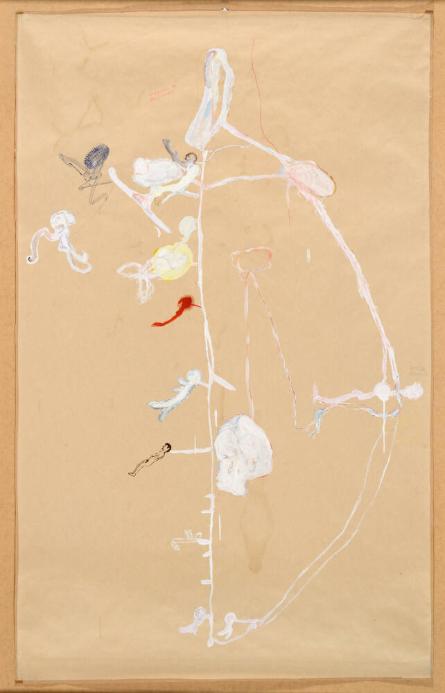
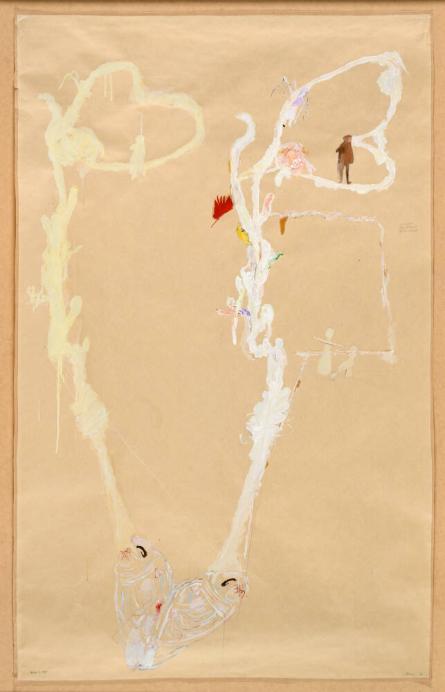
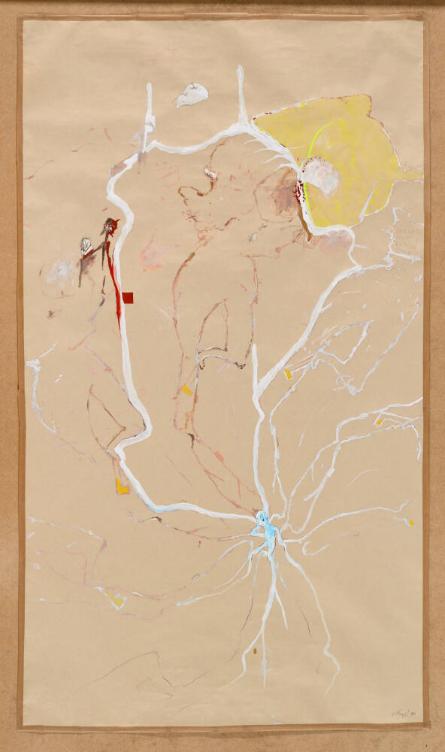
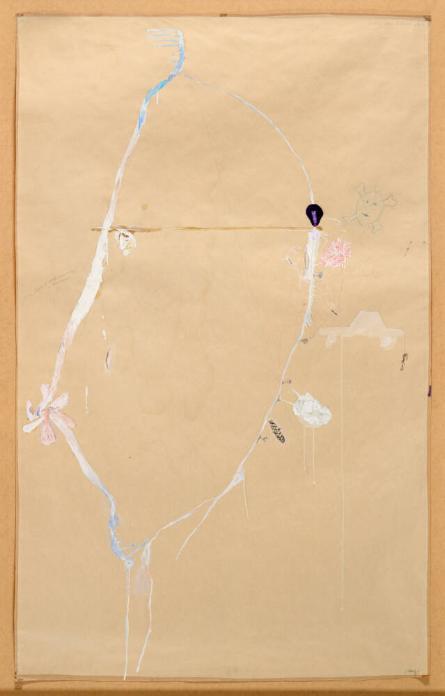
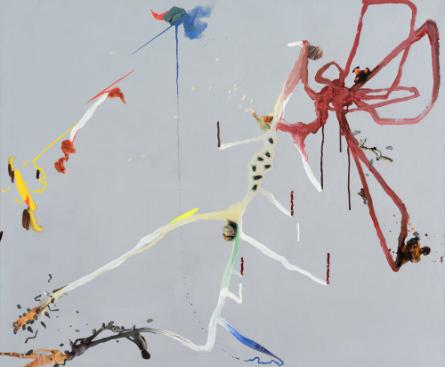
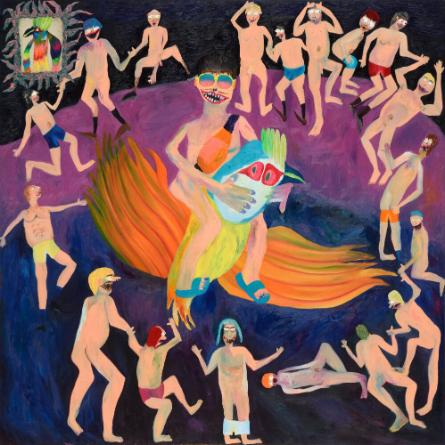
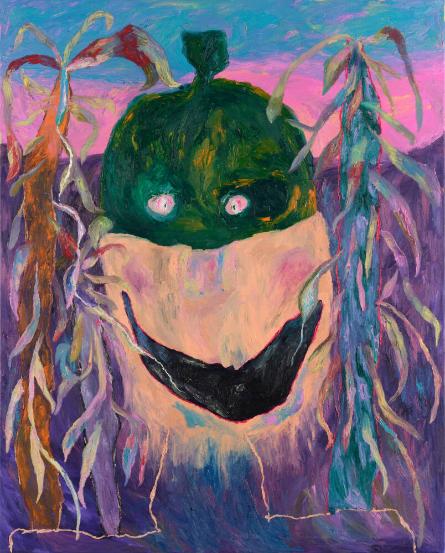
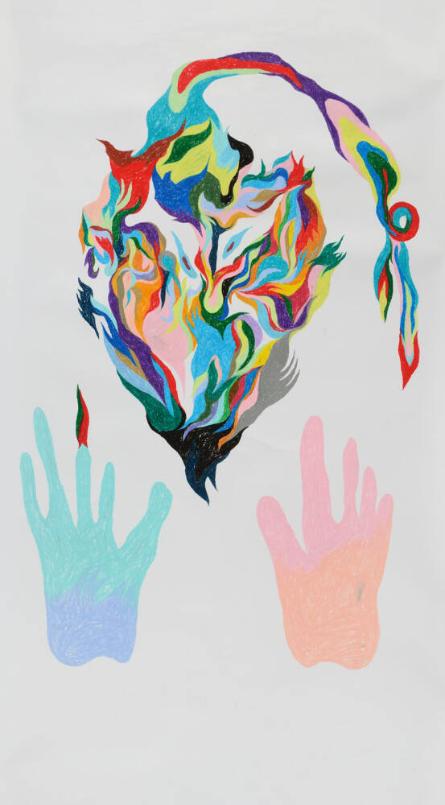
DescriptionJiří Černický is a prominent figure of the Czech art scene of the 1990s. His post-conceptual art is characterized by an effort to address the problems of contemporary society as well as by its distinctive material execution. Černický’s early work from the beginning of the 1990s related to his upbringing in Northern Czechia. Ústí nad Labem and a brown coal mine in Chabařovice served as the settings for his first public actions, focused on intervening into the social reality of the local context. A defining element of these performances was the incorporation of Černický’s nude body, meant to accentuate the transformative power of art and simultaneously draw attention to the renewed access to public space and the re-establishment of personal rights and freedoms. However, Černický’s art soon transcended its close ties to the local environment and began engaging with a more global context; nevertheless, Černický’s interest in illuminating social and ecological questions, his pursuit of personal introspection and his tendency toward experimentation continued to shape his work. His artistic practice also continuously seeks to examine societal trust in ideologies, religion, and spirituality more broadly, a focus linked to his personal experience of life under socialism and the subsequent transition to capitalism. Černický’s art critically examines the dark sides of these ideologies, contrasting them with socio-cultural relations in remote parts of the world. His interest in modernist avantgarde art also imbues his work with a distinctly utopian dimension as well as a desire to draw on historical art styles. In exploring his selected topics, Černický employs a pseudo-scientific approach marked by subversive, Dadaist humour, child-like directness, pathos, and an ability to connect and confront myth with reality and documentation with imagination. Černický’s inclination toward performativity also later entered his paintings and objects, demonstrating his disposition for challenging and transcending the boundaries of individual mediums, genres, and styles, intentionally creating hybrid forms. His painting series—such as Dolby Panting, Inner Paintings, Pre-Paintings, and Minimax—represent complex, three-dimensional assemblages which can incorporate varied mundane objects and synthetic materials, which are somewhat at odds with painting’s conventional aestheticizing nature. The intentional anti-aesthetic qualities of Černický’s work, as well as its emphasis on DIY elements, purposely challenge the enduring local tendency to sacralise painting and spotlight arts connection with other spheres of life. This approach also illuminates the links between this segment of his oeuvre and his conceptual projects, with his novel formal execution addressing confrontational and polemical topics without abandoning a deliberately cultivated ambiguity.
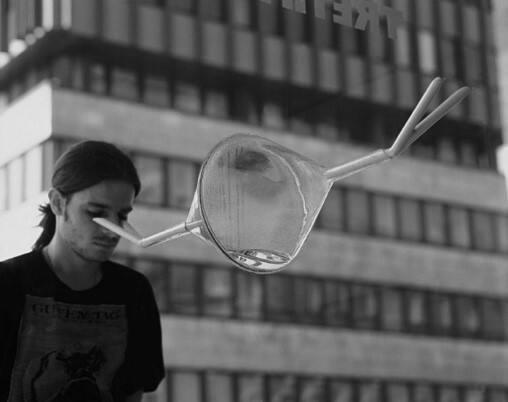
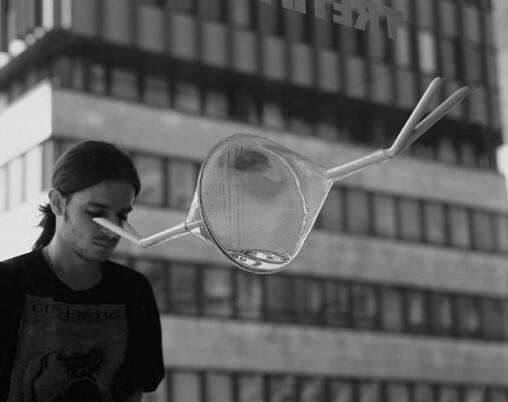
The film Tears for Ethiopia (1993–1994 / 2021–2022) introduces the story of Černický’s action titled Absurd Charity – Tears for Africa/Tears for the World: Tears for the Disabled of the Third World (1993–1994), which he characterized as a fanatical and utopian project for the salvation of humanity. As part of the project, he transformed the Emil Filla Gallery in Ústí nad Labem into the headquarters of a charity and subsequently invited local people to take part in a “collection of tears” for disabled Ethiopians, which would be sent to them along with material charitable gifts, thus representing a spiritual expression of solidarity demonstrative of true empathy and compassion. After an arduous journey from Kenya to Ethiopia, during which Černický adopted the role of a pilgrim and a carrier of a “holy reliquary”, he personally handed the tears over to representatives of a monastery in the Ethiopian town of Lalibela. The film, composed of authentic footage from the journey, is full of pathos and hyperbole, presenting information about Černický’s associated suffering and experience of danger. This significant, expressive action also thematizes the important transformational period during which the Czech Republic broke free from the influence of the Soviet Union and became part of the “developed” geopolitical sphere of Western Europe. Černický’s attempt to express solidarity with the citizens of a country whose lives were left unaltered by this positively perceived shift demonstrates the fact that entering the globalized world should also entail assuming a share of social responsibility. Motivation for the action stemmed from a desire to rehabilitate utopian thinking, which was intensely suppressed by the fall of the Iron Curtain and the Soviet Union. The work also explores Czech society’s loss of religion and spirituality, largely instigated by communism and subsequently exacerbated by capitalism’s prioritization of the economic facets of life. With this utopian act, Černický demonstrated that religion and spirituality still have an important role in society—blind rationalism and reducing existence to its material dimensions produce a spiritual void conducive to social decay.
Jiří Černický (born 1966, Ústí nad Labem) studied at the Faculty of Education o the University of Jan Evangelista Purkyně in Ústí nad Labem between 1987 and 1990. After moving to Prague, he initially attended the Academy of Arts, Architecture and Design in Prague from 1990 to 1993 and subsequently the Academy of Fine Arts in Prague from 1993 to 1997. Since 2010, he has been head of the painting studio at the Academy of Arts, Architecture and Design. Alongside his artistic practice, Černický occasionally works as a curator and also writes poetry and fiction. In 1990, before starting his studies at the Academy of Arts, Architecture and Design, he spent several months working in a brown coal mine in Chabařovice. Here, he actions focused on intervening into the social reality of Ústí nad Labem (Barn, 1990; Open Apartment Boundary, 1991), and two radical performances incorporating the striking visual presence of a gigantic mining machine (Largest Graphic in the World, 1990; Meteo Body Painting, 1991). Already around the year 2000, his work began to feature in international collective exhibitions presenting the art of Central and Eastern Europe: After the Wall (Moderna Museet, Stockholm; Ludwig Museum, Budapest; Hamburger Bahnhof, Berlin; 1999–2000), Hot/Cold? – Summer Loving (Zacheta National Gallery of Art, Warsaw, 2006), Form Follows… Risk (Futura, Prague; Slovak National Gallery, Bratislava, 2007), Central Europe Revisited (Esterhazy Castle, Eisenstadt, Austria, 2008), A Part of No-Part: Parallelisms Between Then and Now (Chelsea Art Museum, New York, 2010), Format of Transformations 89-09 (MUSA auf Abruf, Vienna, 2010), 90s: Scars (Museum of Modern and Contemporary Art, Rijeka, 2021). Important recent solo exhibitions of his work have included Wild Dreams (Galerie Rudolfinum, Prague, 2016) and Dragon on My Back (Futura, Prague, 2018–2019). Group exhibitions—such as After the Velvet – Contemporary Czech Art with Overlaps in the Past (Prague City Gallery – House at the Golden Ring, Prague, 2009), Disturbed Balance Revisited (House of Arts in Ústí nad Labem, 2021–2022), Heroin Crystal: The Nineties Generation (Prague City Gallery – Stone Bell House, Prague, 2022)—have spotlighted his influence on the Czech art scene of the 1990s. Černický has received several awards for his work, including the Soros Award (1996), the Jinřich Chalupecký Award (1998), and 48th October Salon Award in Belgrade (2007). His work is included in the collections of the National Gallery Prague, the Prague City Gallery, the Museum of Contemporary Art in Miami, the Museum für Angewandte Kunst in Vienna, and the Musée d'Art Moderne et Contemporain in Saint-Étienne.
The film Tears for Ethiopia (1993–1994 / 2021–2022) introduces the story of Černický’s action titled Absurd Charity – Tears for Africa/Tears for the World: Tears for the Disabled of the Third World (1993–1994), which he characterized as a fanatical and utopian project for the salvation of humanity. As part of the project, he transformed the Emil Filla Gallery in Ústí nad Labem into the headquarters of a charity and subsequently invited local people to take part in a “collection of tears” for disabled Ethiopians, which would be sent to them along with material charitable gifts, thus representing a spiritual expression of solidarity demonstrative of true empathy and compassion. After an arduous journey from Kenya to Ethiopia, during which Černický adopted the role of a pilgrim and a carrier of a “holy reliquary”, he personally handed the tears over to representatives of a monastery in the Ethiopian town of Lalibela. The film, composed of authentic footage from the journey, is full of pathos and hyperbole, presenting information about Černický’s associated suffering and experience of danger. This significant, expressive action also thematizes the important transformational period during which the Czech Republic broke free from the influence of the Soviet Union and became part of the “developed” geopolitical sphere of Western Europe. Černický’s attempt to express solidarity with the citizens of a country whose lives were left unaltered by this positively perceived shift demonstrates the fact that entering the globalized world should also entail assuming a share of social responsibility. Motivation for the action stemmed from a desire to rehabilitate utopian thinking, which was intensely suppressed by the fall of the Iron Curtain and the Soviet Union. The work also explores Czech society’s loss of religion and spirituality, largely instigated by communism and subsequently exacerbated by capitalism’s prioritization of the economic facets of life. With this utopian act, Černický demonstrated that religion and spirituality still have an important role in society—blind rationalism and reducing existence to its material dimensions produce a spiritual void conducive to social decay.
Jiří Černický (born 1966, Ústí nad Labem) studied at the Faculty of Education o the University of Jan Evangelista Purkyně in Ústí nad Labem between 1987 and 1990. After moving to Prague, he initially attended the Academy of Arts, Architecture and Design in Prague from 1990 to 1993 and subsequently the Academy of Fine Arts in Prague from 1993 to 1997. Since 2010, he has been head of the painting studio at the Academy of Arts, Architecture and Design. Alongside his artistic practice, Černický occasionally works as a curator and also writes poetry and fiction. In 1990, before starting his studies at the Academy of Arts, Architecture and Design, he spent several months working in a brown coal mine in Chabařovice. Here, he actions focused on intervening into the social reality of Ústí nad Labem (Barn, 1990; Open Apartment Boundary, 1991), and two radical performances incorporating the striking visual presence of a gigantic mining machine (Largest Graphic in the World, 1990; Meteo Body Painting, 1991). Already around the year 2000, his work began to feature in international collective exhibitions presenting the art of Central and Eastern Europe: After the Wall (Moderna Museet, Stockholm; Ludwig Museum, Budapest; Hamburger Bahnhof, Berlin; 1999–2000), Hot/Cold? – Summer Loving (Zacheta National Gallery of Art, Warsaw, 2006), Form Follows… Risk (Futura, Prague; Slovak National Gallery, Bratislava, 2007), Central Europe Revisited (Esterhazy Castle, Eisenstadt, Austria, 2008), A Part of No-Part: Parallelisms Between Then and Now (Chelsea Art Museum, New York, 2010), Format of Transformations 89-09 (MUSA auf Abruf, Vienna, 2010), 90s: Scars (Museum of Modern and Contemporary Art, Rijeka, 2021). Important recent solo exhibitions of his work have included Wild Dreams (Galerie Rudolfinum, Prague, 2016) and Dragon on My Back (Futura, Prague, 2018–2019). Group exhibitions—such as After the Velvet – Contemporary Czech Art with Overlaps in the Past (Prague City Gallery – House at the Golden Ring, Prague, 2009), Disturbed Balance Revisited (House of Arts in Ústí nad Labem, 2021–2022), Heroin Crystal: The Nineties Generation (Prague City Gallery – Stone Bell House, Prague, 2022)—have spotlighted his influence on the Czech art scene of the 1990s. Černický has received several awards for his work, including the Soros Award (1996), the Jinřich Chalupecký Award (1998), and 48th October Salon Award in Belgrade (2007). His work is included in the collections of the National Gallery Prague, the Prague City Gallery, the Museum of Contemporary Art in Miami, the Museum für Angewandte Kunst in Vienna, and the Musée d'Art Moderne et Contemporain in Saint-Étienne.